
Last updated November 2, 2026
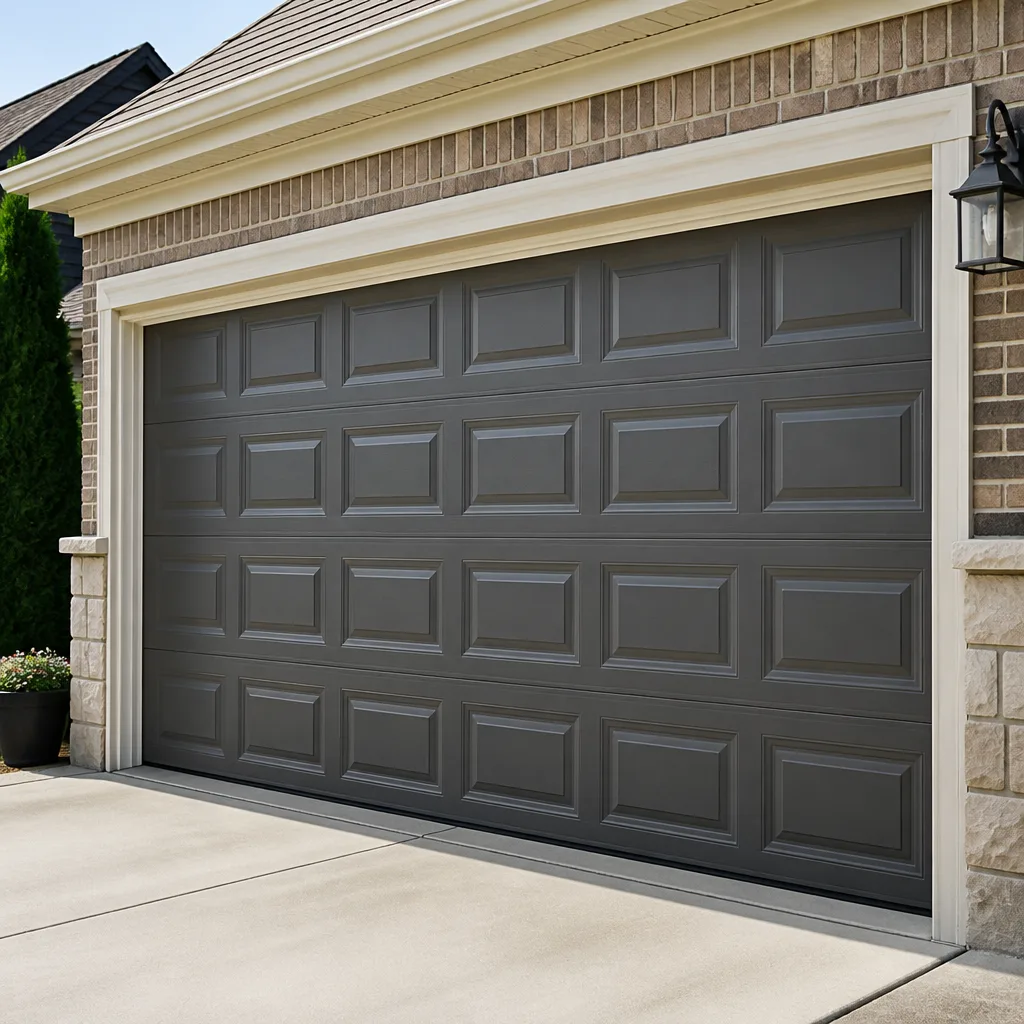 Raised-panel steel
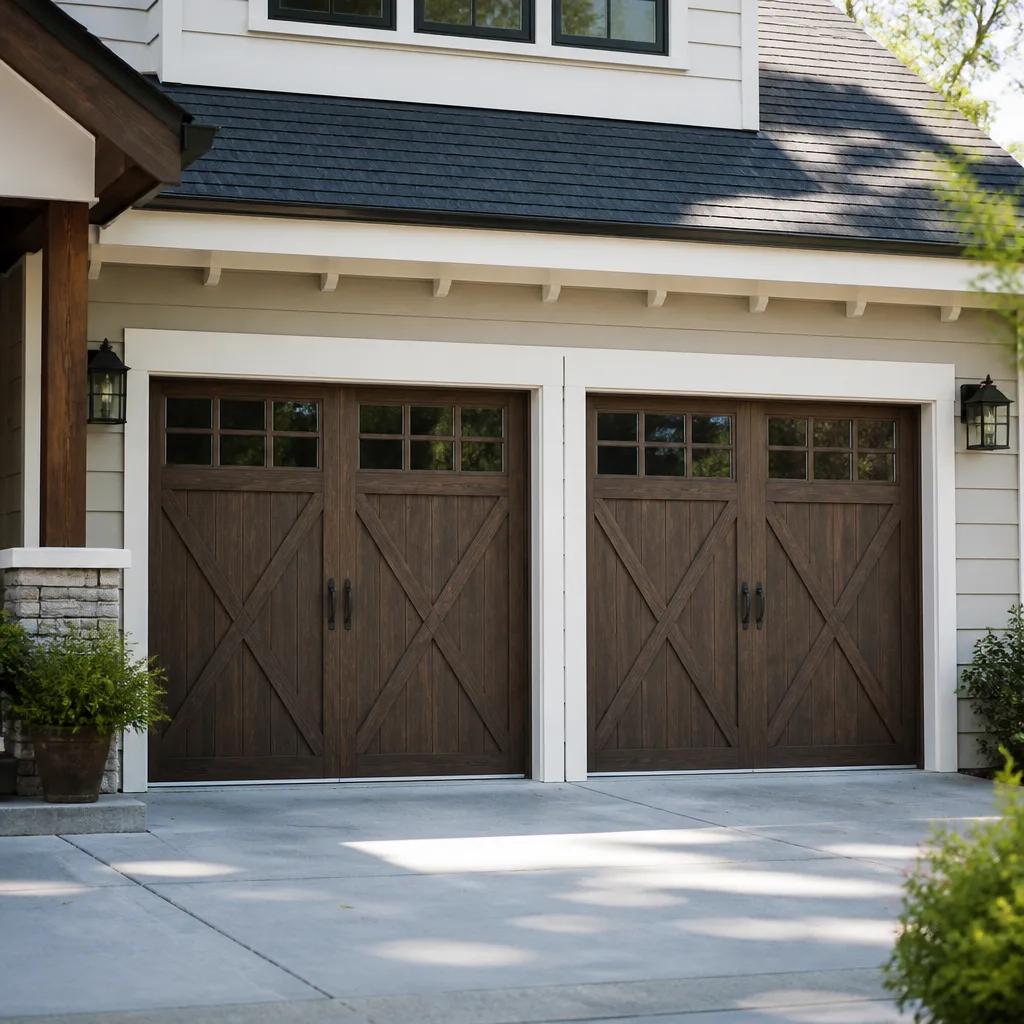 Carriage house
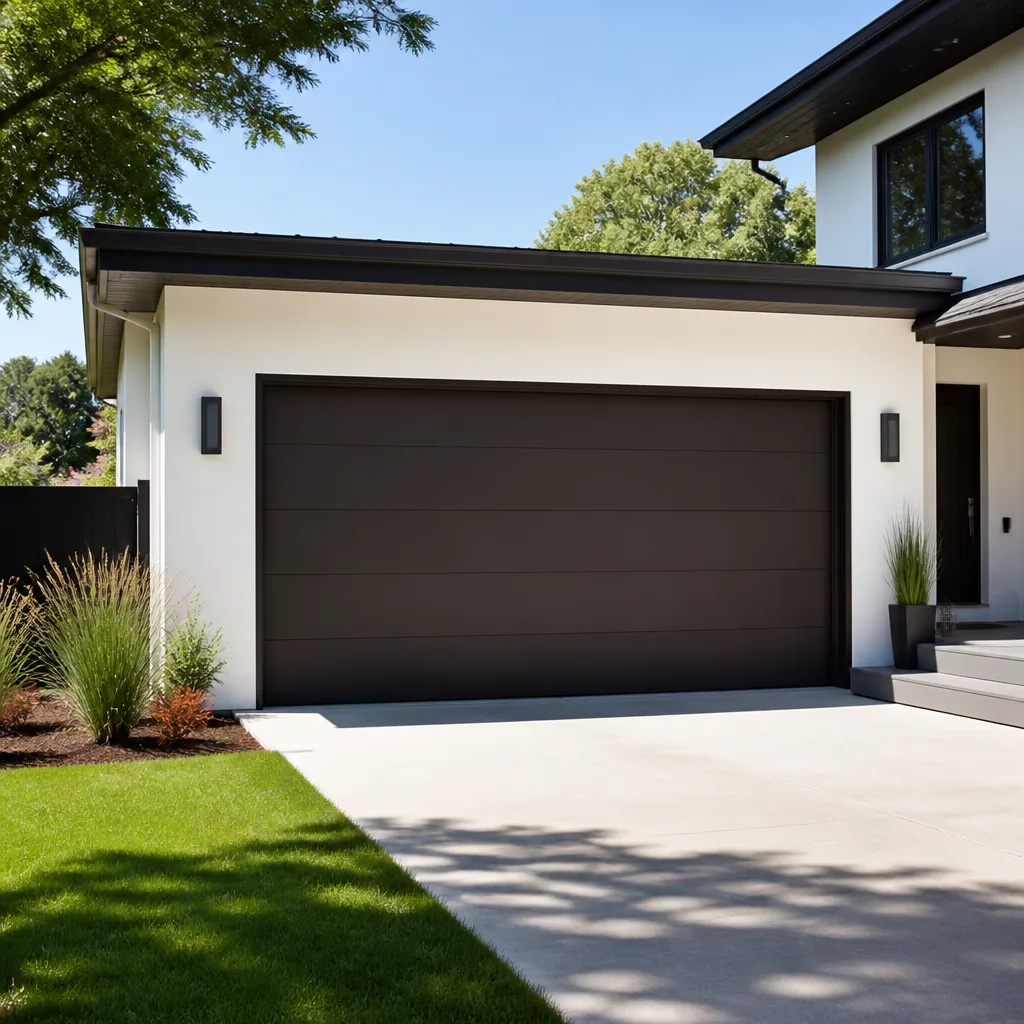 Modern flush
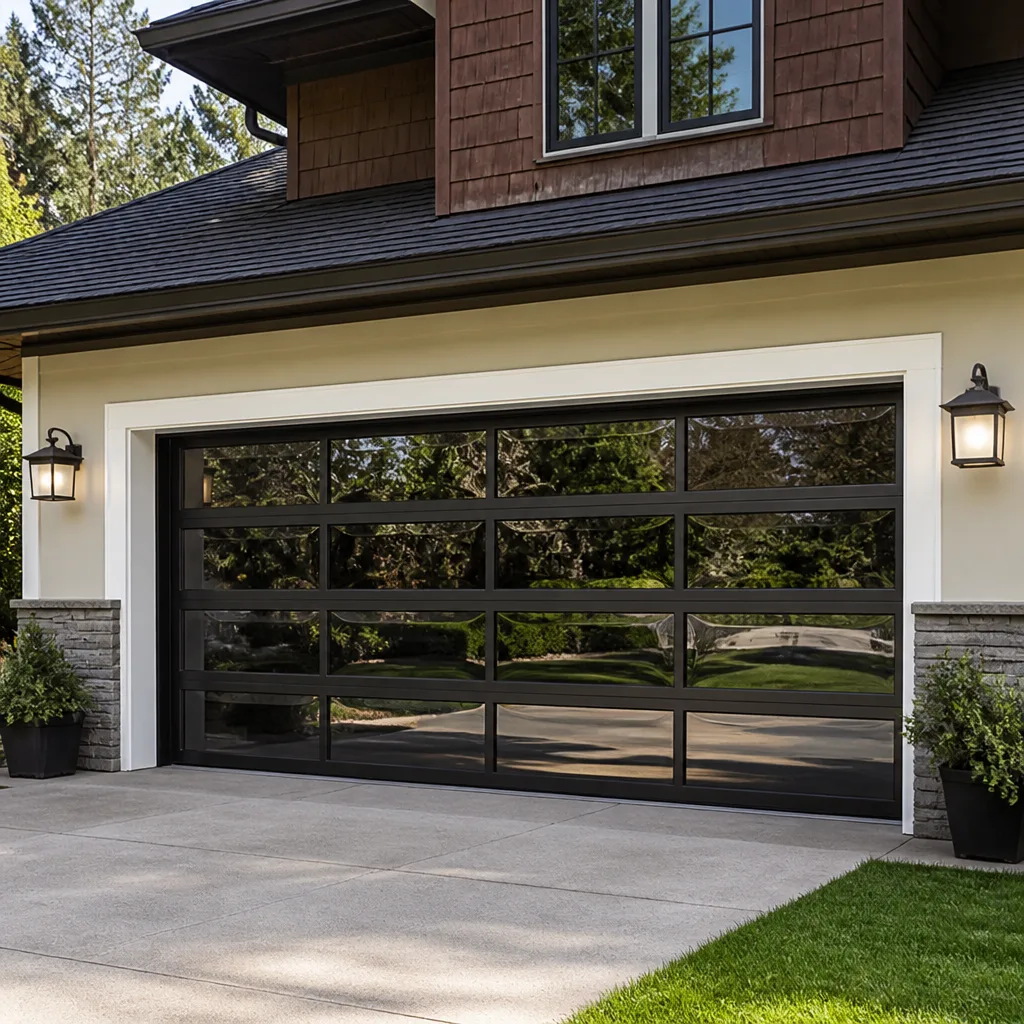 Full-view glass
 LiftMaster openers
 Chamberlain openers
Full 25-point door and opener safety check with every visit - springs, cables, rollers, tracks, and your LiftMaster or Chamberlain opener included
You get a price before we start. It does not change when the truck arrives.
Get your free estimateGarage Door Warning Signs: A Gardena Homeowner’s Reference Guide
Most garage door failures don’t happen suddenly. They announce themselves weeks, sometimes months, in advance. The problem is that homeowners are conditioned to ignore gradual changes: a door that’s a little slower than it used to be, a hum that wasn’t there last spring, a slight hesitation when the opener engages. Here’s the thing about Gardena: our climate is mild, but our garages work hard. The marine layer brings moisture, the afternoons bring heat, and the salt air from the coast works on metal components year-round. This guide walks you through every warning sign that matters, what each one means, and which ones need attention today versus which can wait a week. For more home maintenance tips, see our Seasonal Garage Door Care for Gardena: Year-Round Homeowner’s Guide.
Quick Answer
A grinding noise points to worn rollers or bearings, while a slow, labored movement usually signals opener motor or spring fatigue. A door that reverses mid-cycle is almost always a sensor alignment issue, but one that reverses at the floor is typically a force-setting problem. Any loud bang from the spring area, a visibly cracked or rusted spring, a door that falls when released, or a cable that’s frayed or hanging loose is a safety emergency that requires a professional immediately.
Styles & brands we work with
- Raised-panel steel
- Carriage house
- Modern flush
- Full-view glass
- LiftMaster openers
- Chamberlain openers
Table of Contents
- Warning Sign 1: Sounds That Tell You What’s Failing
- Warning Sign 2: Movement Anomalies Are Diagnostic Clues
- Warning Sign 3: Spring Problems You Can See Without Touching Anything
- Warning Sign 4: Cable and Track Warning Signs
- Warning Sign 5: Opener-Specific Warning Signs
- Warning Sign 6: Issues Specific to Older Gardena Homes
- Warning Sign 7: How to Tell an Emergency From a Scheduled Repair
Warning Sign 1: Sounds That Tell You What’s Failing
A grinding noise and a slow noise are not the same problem. Most Gardena homeowners call us describing “a noise” without realizing that the specific sound is a diagnostic fingerprint. Here’s what we listen for when a customer describes what they’re hearing:
- Metal-on-metal grinding: Almost always worn rollers. The bearings inside the roller seize up, and the wheel stops rolling, instead dragging along the track. On Clopay and Wayne Dalton doors, this is especially common after 8-10 years because the nylon rollers wear down to the steel core. Replacement rollers are a straightforward fix, but they should be swapped out before the track gets gouged.
- Rattling or chattering: Loose hardware. Bolts, brackets, and hinge plates vibrate loose over time. A door that rattles while moving is essentially telling you that components are shifting under load. This is one of the cheapest problems to fix and one of the most commonly ignored.
- High-pitched squealing: Dry or worn bearings in the rollers, pulleys, or opener motor. A quick lubrication can sometimes quiet this, but if the squeal returns within a week, the bearing is likely pitted and needs replacement.
- Loud popping or banging at regular intervals: This is usually a cable catching on a worn drum, or a roller hitting a misaligned track joint. A popping sound is a rhythmic indication that something is binding and releasing under tension.
- Humming with no movement: The opener motor is running, but the door isn’t responding. This typically means the drive gear is stripped or the carriage is disengaged. On older Craftsman and Genie openers, stripped drive gears are a known failure point after years of use.
The takeaway: don’t describe a garage door noise as “weird.” Describe it as specifically as possible. Is it constant or rhythmic? Does it change when the door changes direction? Does it happen only on certain sections of the track? We can narrow down the cause before we even arrive at your Gardena home.
Warning Sign 2: Movement Anomalies Are Diagnostic Clues
How a door moves tells you more than how it sounds. A door that reverses immediately and a door that reverses halfway are not the same problem. Neither is a door that hesitates at the bottom versus one that binds at the top. Here’s how to read the movement:
- Reverses immediately after touching the floor: The opener’s force sensitivity is set too high, or the floor surface has shifted. In Gardena, homes with concrete slab foundations can develop small cracks or unevenness from soil movement. The door hits the high spot, the opener reads it as an obstruction, and reverses. This is usually a force-adjustment or track-height issue, not a sensor problem.
- Reverses at the halfway point: This is typically a track obstruction, a bowed panel, or a roller that’s come off the track. It could also be a failing logic board in an older LiftMaster or Chamberlain unit. When the board starts to go, it can misread sensor signals and reverse erratically.
- Door hesitates or stutters when starting: On chain-drive openers, this often means a loose chain. On belt-drive units, it’s usually a worn belt or a slipping carriage. A stutter at startup is a sign that the opener is working harder than it should be, which shortens its life.
- Door drifts down after opening: A door that creeps down on its own is telling you the springs are losing tension. The springs counterbalance the weight of the door. When they weaken, the door becomes too heavy for the opener to hold at the top. This is a spring issue, not an opener issue.
- Door jerks or shudders mid-travel: One section is binding. This could be a bent track, a damaged roller, or a panel that’s coming apart at the hinge point. On Amarr and Raynor doors with steel panels, a dent from a car bumper or a basketball can create exactly this kind of shudder.
- Door accelerates toward the floor: This is a red flag. A properly balanced door should stay put at the halfway point when released. If it wants to slam down, the springs are critically weak. This is one of the warning signs that should never be ignored, because a spring that lets go entirely can cause serious injury.
The fix for each of these is different. What matters is that you don’t keep using the door and hope it goes away. It won’t. The specific movement anomaly tells us which component is failing. Our team works on virtually every door and opener system a Gardena homeowner already has, so diagnosis is quick and repair is targeted, not a guess. If you’re planning a bigger project, read How to Hire a Garage Door Contractor in Gardena: A Step-by-Step Guide.
Warning Sign 3: Spring Problems You Can See Without Touching Anything
Springs are the most dangerous component on a garage door system. They hold hundreds of pounds of tension, and when they fail, they fail violently. But here’s what most people don’t realize: springs rarely fail without visible warning first. You can spot the signs without touching anything.
For torsion spring systems (the spring mounted above the closed door, running horizontally along a metal shaft):
- Visible gap in the spring coil: A torsion spring that’s about to break often develops a visible separation in the coil. If you see a gap that wasn’t there before, the spring is already failing
- Rust or corrosion on the spring: Rust creates friction and weak spots, especially in Gardena’s coastal air. Rusted springs snap more often than clean ones, and the rust itself is a warning that the spring is near the end of its usable life.
- Door feels heavy when operated manually: Pull the red release handle and try to lift the door by hand. A properly sprung door lifts with minimal effort and stays at the halfway point. If it feels like dead weight, the spring is shot.
For extension spring systems (springs running horizontally along the track on each side, common on older doors):
- Spring visibly stretched or sagging: Extension springs should be taut along the track. If one is sagging or longer than its partner, it’s lost tension.
- One spring broken and hanging: This is obvious, but some homeowners don’t notice because the opener still moves the door. Don’t run the opener with a broken extension spring. It’s putting the entire load on the other side, which will fail next.
If you notice any of these signs, stop using the door and call a professional. Spring repair is never a DIY job. The tension required can cause fatal injury if it releases incorrectly. A trained technician has the tools and the knowledge to replace springs safely and balance the door correctly. Garage Door Repair in Gardena covers spring diagnosis, replacement, and rebalancing, and it’s the one repair we never recommend postponing.
Warning Sign 4: Cable and Track Warning Signs
Cables and tracks are the parts of the system that guide the door and keep it aligned. When they start to fail, the door will tell you in specific ways that are different from spring or opener problems.
- Frayed or unraveling cable: The cables under tension run alongside the door and wrap around drums at the top. When individual wires start to poke out or the cable looks fuzzy, it’s close to snapping. A snapped cable under load can whip with tremendous force. This is an emergency warning sign.
- Cable off the drum or wrapped unevenly: If the cable is stacking up on one side of the drum or has jumped the groove entirely, the door will lift unevenly. You’ll see one side higher than the other when the door is halfway up. Continued use will bend the track and damage the panels.
- Track bends or visible gaps at the joints: The track sections are bolted together at intervals. If a joint has separated, you’ll see a gap. If the track has been hit (a car bumper, a wayward ladder, a trash can), you’ll see a dent or kink. The rollers can’t pass smoothly through these sections, which causes the shuddering many Gardena homeowners report.
- Worn or chipped rollers: Nylon rollers typically last 7-12 years. Steel rollers can last longer but are louder. If you can see flat spots, cracks, or missing nylon coating on your rollers, they’re causing increased friction on the track and shortening the life of the opener.
What’s important here is that track and cable problems compound. A bent track wears out a roller. A worn roller puts side-load on the hinge. The hinge pulls on the panel. A frayed cable finally snaps, and the door drops. Catching these signs early prevents a chain reaction. And while most track and cable work requires a professional with the right tools, simply checking for visible damage is safe and takes under a minute.
Warning Sign 5: Opener-Specific Warning Signs
Openers are the most common point of failure in Gardena garages, and opener warning signs are often the most subtle. Some of these symptoms seem minor, but they indicate imminent motor or logic-board failure. Here’s what to watch for:
- Door moves noticeably slower than it did a year ago: If your LiftMaster or Chamberlain door used to open in 12 seconds and now takes 20, the motor is working harder. This could be a dying capacitor, a worn drive gear, or increased door weight from failing springs. It’s worth acting on immediately because a struggling motor burns out faster than a healthy one.
- Opener runs for a second, then stops: This is often a limit-switch issue or a failing logic board. On Genie and Craftsman units from the 2000s and early 2010s, logic-board failure is so common that we keep replacement boards on hand for most models.
- Remote works intermittently or only from close range: The receiver board or the antenna may be failing. Intermittent remote issues are also sometimes caused by LED bulb interference, but if the range has degraded over months, the opener’s receiver is the likely culprit.
- Safety sensors misaligned or blinking: The photo-eye sensors at the bottom of the track must stay aligned. If they’re blinking or the door reverses immediately every time, they’ve lost alignment or one has failed. A flickering or weak sensor is a sign the wiring is aging.
- Grinding sound from the opener unit itself: On chain-drive openers, this is usually a stripped drive gear. On belt-drive units, it’s often a worn gear or a slipping carriage. The motor is running, but the force isn’t transferring to the door.
Opener repair is its own discipline. The electronics, remotes, safety sensors, and drive systems are all interdependent, and most general door companies treat them as an afterthought. Garage Door Opener Repair in Gardena is a dedicated service for us, not a side task. We train on LiftMaster, Chamberlain, Genie, and Craftsman systems specifically, so when a customer calls about a blinking light or a stripped gear, we already know what we’re looking for before we pull into the driveway.
Warning Sign 6: Issues Specific to Older Gardena Homes
A number of Gardena’s residential neighborhoods date to the 1950s and 1960s. Homes from that era often have garage door systems that differ from what’s installed in newer construction. If you live in an older home, watch for these specific warning signs:
- Two-piece doors with a vertical center seam: These doors are built in two sections with a hinge in the middle. The center hinge is a known failure point. If you see the door flexing at the seam or hear a creak from the center when the door moves, the hinge plates or the structural frame are weakening. Two-piece doors also put unique stress on side tracks, and worn track brackets are common.
- Side-mount spring systems: Many older doors used side-mounted extension springs rather than the overhead torsion design. These springs run along the track rather than across the header. They’re more likely to snap without the dramatic warning signs of torsion springs, partially because they don’t have the visible coil gap that torsion springs develop. If your older door has side springs, check them regularly for sagging, rust, or uneven tension.
- Obsolete opener logic boards: Openers manufactured before 2000 used circuit boards that are no longer in production. When they fail, they often fail progressively: first the remote range shrinks, then the wall button becomes unresponsive, then the opener stops working entirely. If your opener is over 20 years old, these behaviors indicate the board is failing, and replacement parts may not exist. A new opener is usually the right call at that point.
- Wood doors in a marine climate: Gardena’s proximity to the coast means moisture exposure for wood doors. Warping, paint peeling, and panel swelling are gradual failures. A warped wood door puts uneven load on the springs and tracks, accelerating wear on everything else.
Foundation movement is another Gardena-specific factor. The area’s soil composition shifts with moisture changes, and garage slabs can settle unevenly. A door that closes fine in the summer but reverses at the floor in winter may be responding to a slab that’s moved, not an opener malfunction. This is something we regularly diagnose in older Gardena neighborhoods and something a generic service call from a company that doesn’t know the area might miss. Garage Door Service Gardena home is built around this kind of local knowledge, and it’s one of the reasons we can work on virtually any door or opener system a homeowner already has, from a 40-year-old wood two-piece to a five-year-old Amarr steel door.
Warning Sign 7: How to Tell an Emergency From a Scheduled Repair
Not all warning signs warrant a same-day service call. Here’s how to prioritize. If you see any of these, stop using the door immediately and call a professional:
- A loud bang from the spring area, like a gunshot: This is a torsion spring snapping. The door is now unsprung and extremely heavy. Do not attempt to lift it.
- Frayed or hanging cable: The cable is under tension and can whip if it releases. A hanging cable also means the door is unsafe to operate even if the opener still moves it.
- Door falls when released or drifts down on its own: The springs have failed to the point of being dangerous. The door could fall at any time.
- Door visibly crooked in the track or one side hanging lower: A cable or spring has failed unevenly. Continuing to run the opener will bend the track and damage the panels.
- Any sign of electrical burning smell from the opener: Unplug the opener and call a professional. This could be a failing motor, a short in the board, or a wiring fault.
On the other hand, these warning signs can usually wait a few days for a scheduled appointment: a noisy roller you haven’t gotten around to replacing, a slightly slow door that’s been consistent for a month, a remote that works intermittently, or a squeak that comes and goes with the weather. These are still warning signs and should be addressed, but they’re not active emergencies.
Our rule of thumb in Gardena is this: if the door is still balanced, the cables are intact, and the opener isn’t making a burning smell, it’s probably safe to use until a technician can get there. If you’re not sure, call. We’ll talk you through what you’re seeing and help you decide whether it’s a same-day emergency or a scheduled repair.
Common Mistakes to Avoid
- Ignoring a slow door for months. We see this constantly in Gardena. A door that’s gradually slowing is almost always telling you something, usually a tired spring or a failing opener motor. The longer you wait, the more expensive the fix, and the more likely a complete failure at an inconvenient time.
- Lubricating worn components instead of replacing them. Lubricant quiets a dry bearing temporarily, but it can’t fix a pitted roller or a stripped gear. In fact, over-lubricating can attract dust and grit and make the problem worse.
- Attempting to replace a torsion spring on your own. This is the one mistake that sends people to the hospital every year. The tension in a garage door spring is lethal. This is not a weekend project.
- Using the opener after a spring has broken. The opener is not designed to lift an unsprung door. Running it anyway bends tracks, cracks panels, and burns out the motor. The spring breaks first; the cascade of damage happens because the door kept running.
- Replacing the opener when the door is the problem. If the door is heavy, unbalanced, or binding, a new opener won’t fix it. The new opener will just wear out faster trying to compensate. Diagnose the door first.
- Assuming a noisy door is normal. No, a garage door should not sound like a freight train. Modern doors with nylon rollers and a properly adjusted opener are surprisingly quiet. Noise is a signal, not a personality trait.
- Putting off a visible cable problem. A frayed cable is a countdown. It will snap. The only question is whether it snaps when you’re standing near it. If you see fraying, call a professional that day.
See the difference
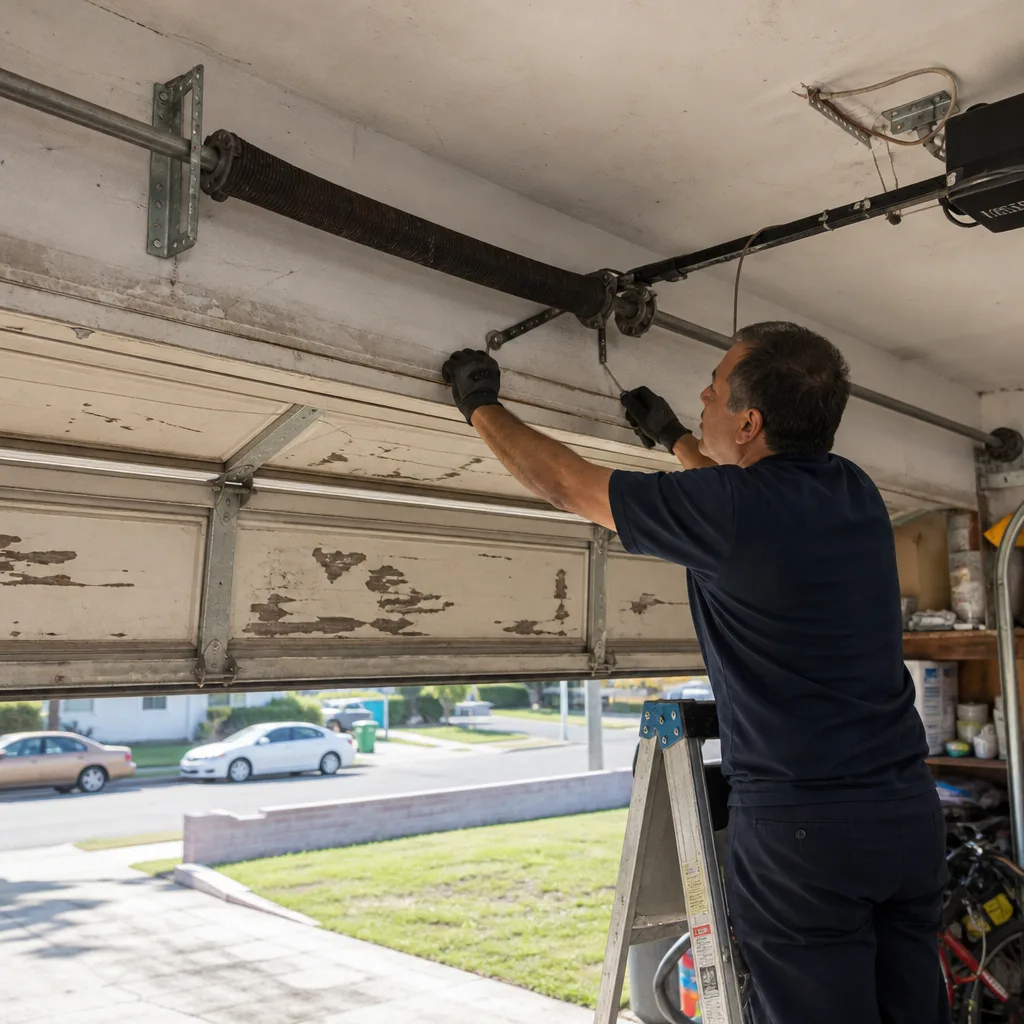 Before
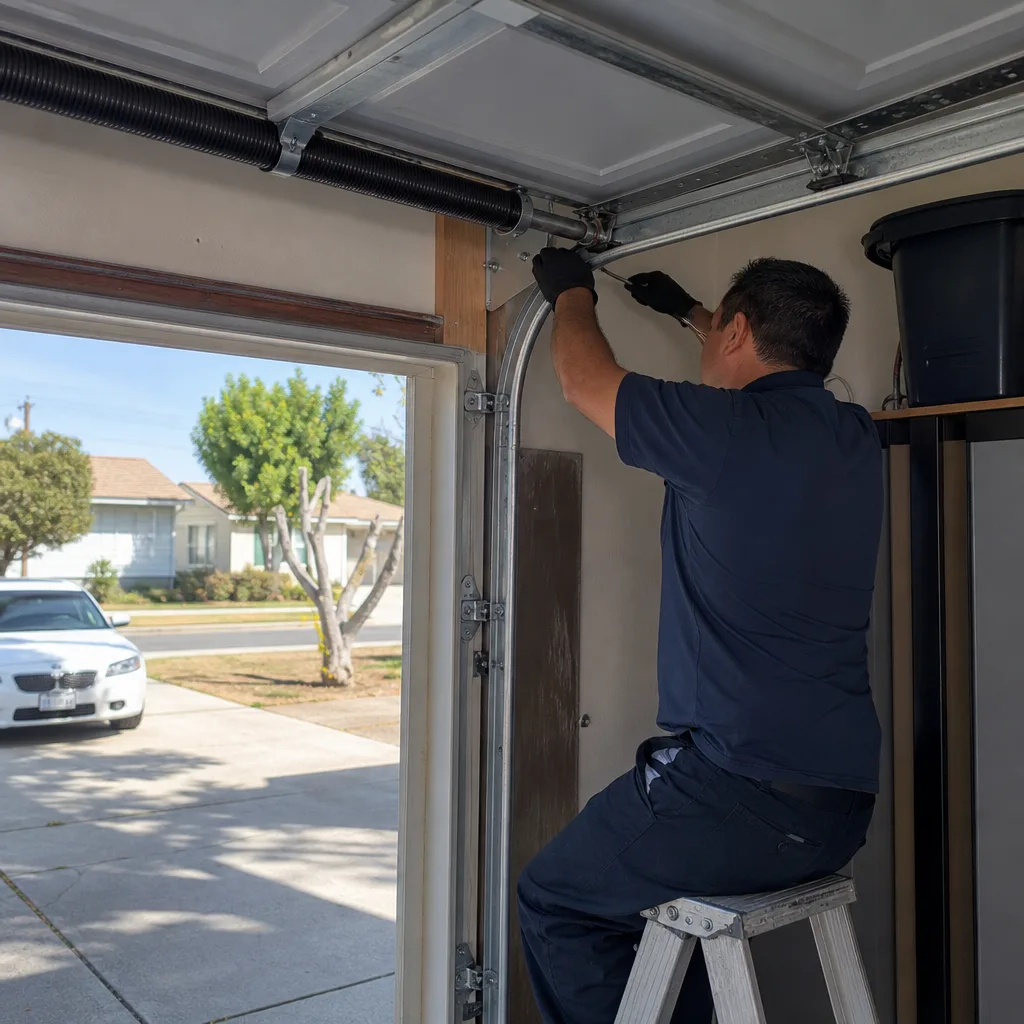 After
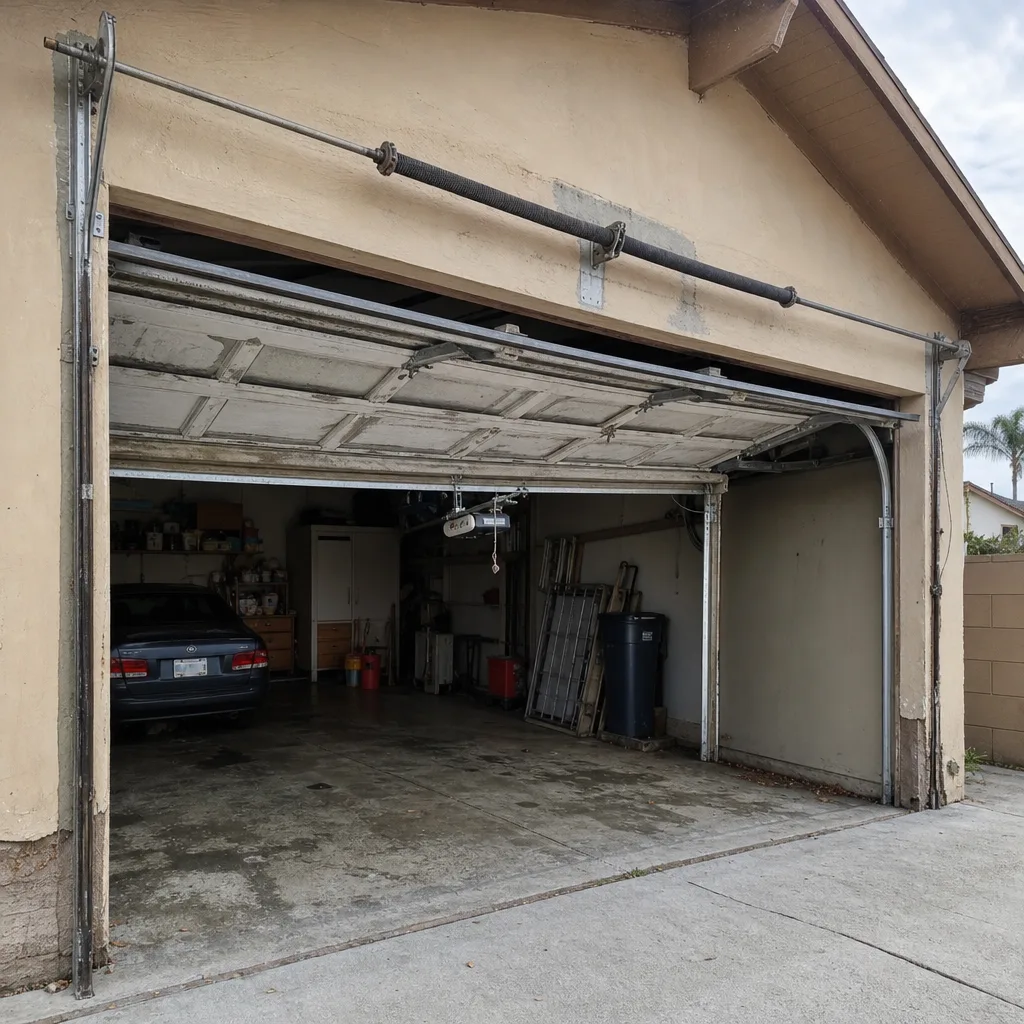 Before
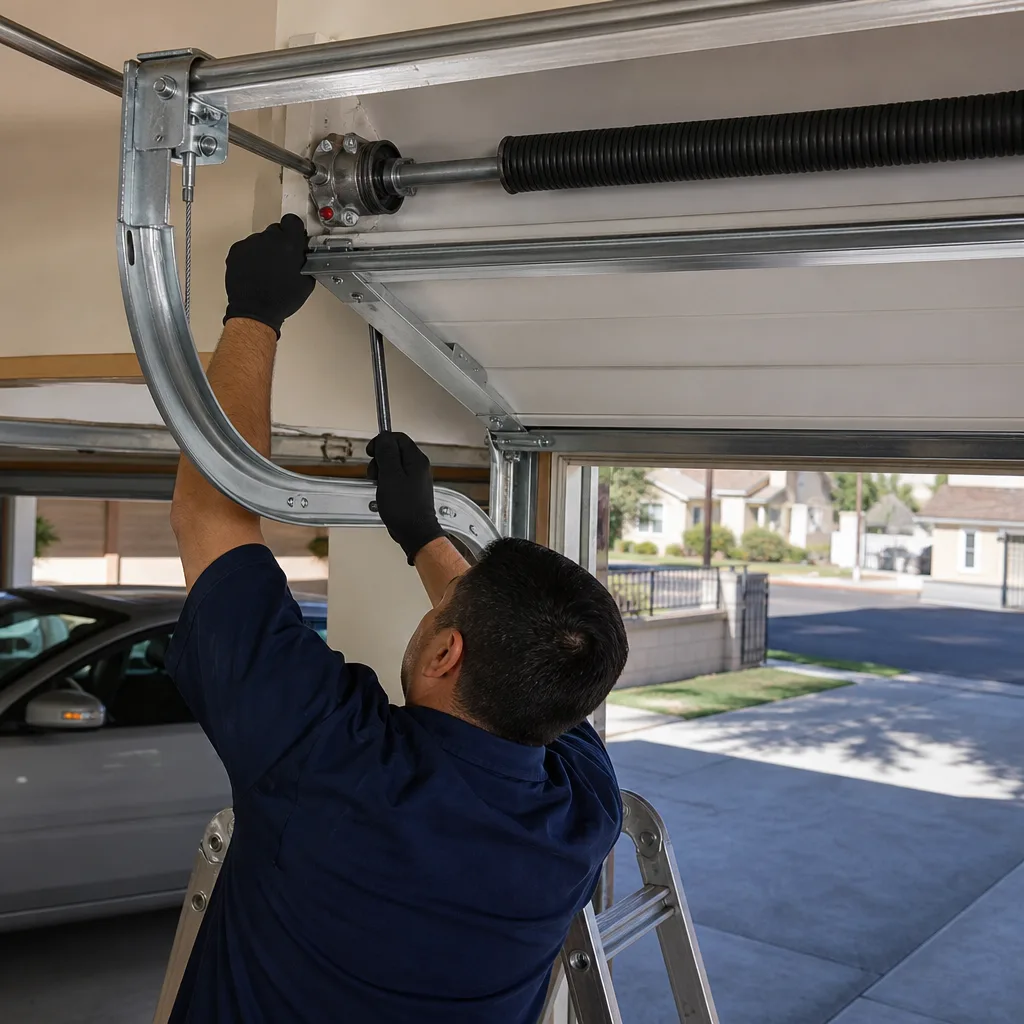 After
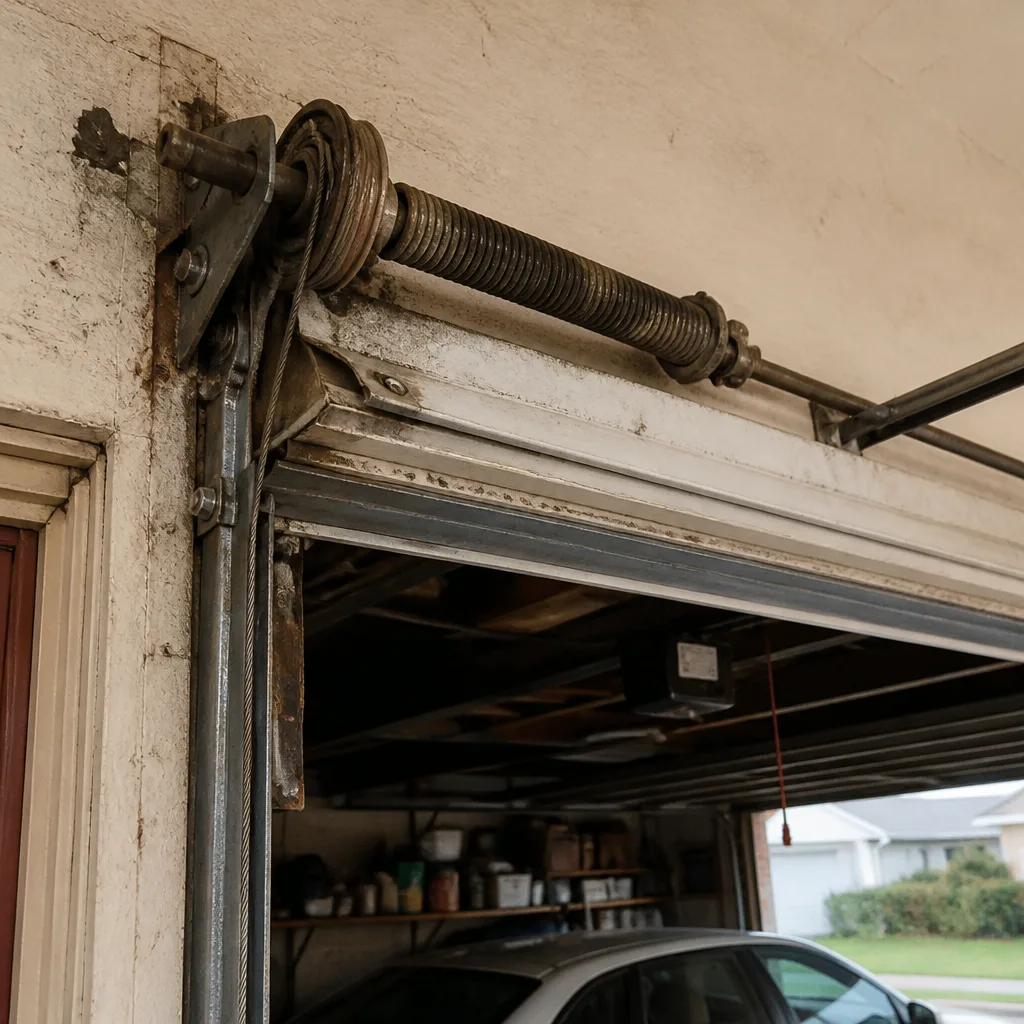 Before
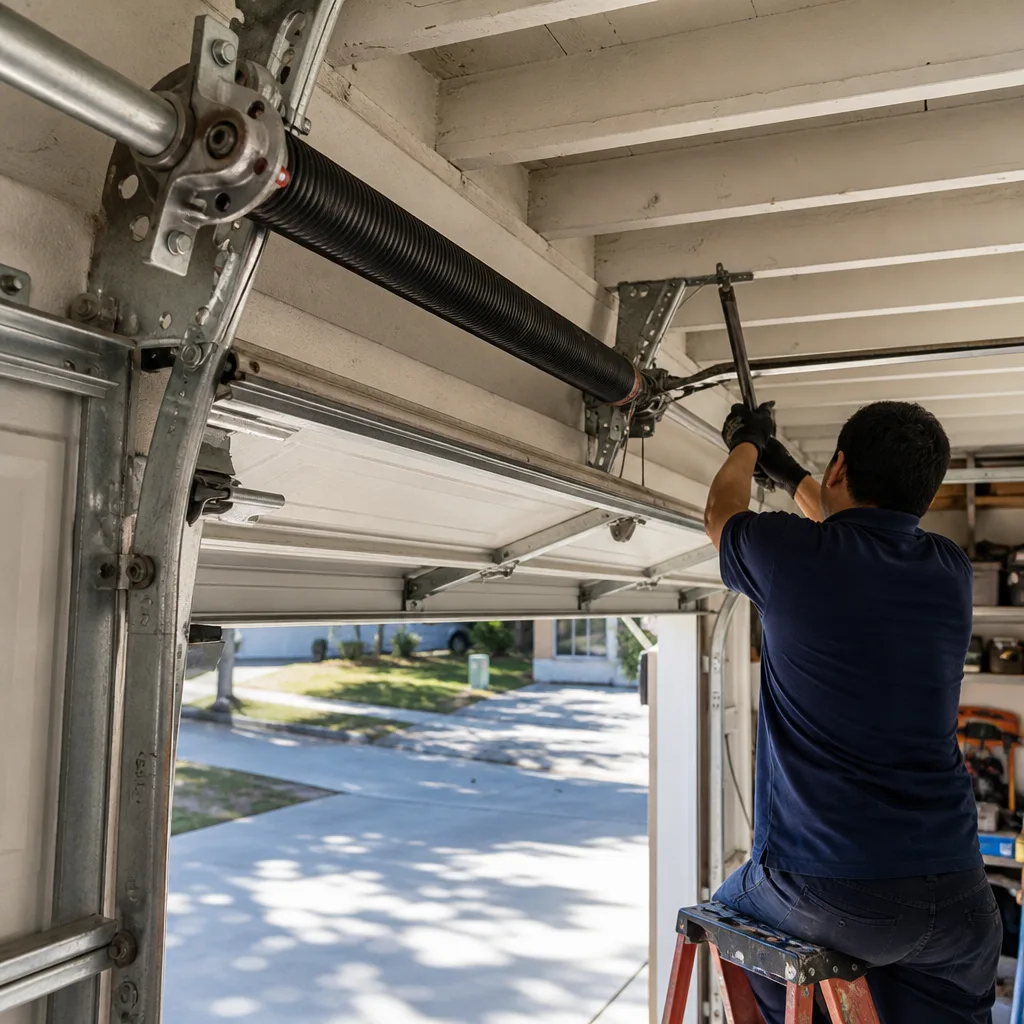 After
When to Call a Professional
Here’s the honest answer: if you’ve read this guide and you still aren’t sure what your door is telling you, that’s exactly when to call. Browse more guides & resources for additional homeowner tips. The warning signs covered here are a diagnostic starting point, not a replacement for a trained eye. Some issues, like a slightly misaligned sensor or a loose chain, are safe to address on your own. Others, like anything involving springs, cables, or opener logic boards, require professional tools and training.
Garage Door Service Gardena offers free estimates in Gardena. Call (866) 562-1805 and describe what you’re seeing or hearing. We’ll give you an honest read on whether it’s urgent, what it likely is, and what it’ll take to fix. No pressure, no upsell. Just the straight answer.
Frequently Asked Questions
The most common ignored warning sign is a door that moves slower than it used to. Most homeowners adapt to the gradual slowdown without noticing it, but a slower door usually indicates worn springs or a weakening opener motor. If your door takes noticeably longer to open now than it did a year ago, call (866) 562-1805 for a free estimate before the component fails completely.
You can check for visible coil gaps in a torsion spring, rust on the spring surface, or a door that feels heavy when operated manually. For extension springs, look for sagging, stretching, or uneven tension. Any of these signs means the spring is near the end of its life. Do not continue using the door, and do not attempt to replace the spring yourself.
This typically means the opener’s down-force setting is too sensitive, or the door is hitting an uneven spot on the floor. In Gardena, slab settling can create gradual unevenness that the door reads as an obstruction. A track adjustment or force-setting correction usually fixes it.
A grinding noise almost always means worn or seized rollers. The roller stops rolling and drags along the track, creating a metal-on-metal sound. Replacement rollers are a straightforward fix, but the track should be inspected for damage at the same time.
A noisy door isn’t necessarily dangerous, but the underlying cause can be. A rattling door with loose hardware shifts components under load. A grinding door wears the tracks. A popping door has a cable or roller binding under tension. The noise itself won’t hurt you, but ignoring it can lead to a sudden, more serious failure. If you’re hearing something new, call (866) 562-1805 and describe the sound. We can usually narrow down the cause over the phone.
Most garage door repairs in Gardena range from $150 to $500 depending on the component. Roller replacement runs $120 to $200, track adjustments $100 to $250, spring replacement $200 to $450, and opener logic board replacement $180 to $350. These are the prices you’ll see quoted and agreed before any work starts. For an exact quote on your door’s specific issue, call (866) 562-1805 for a free estimate.
The Bottom Line
Your garage door is the largest moving object in your home, and it’s sending you signals all the time. The grinding roller, the slow opener, the sagging spring, the frayed cable: each one is a diagnostic clue pointing to a specific failing component. The homeowners who catch these signs early save hundreds compared to those who wait for the loud bang. If you’re in Gardena and you’ve noticed something that wasn’t there before, don’t guess. Call (866) 562-1805 for a free estimate. One call covers it, from diagnosis to repair to a new door if that’s genuinely what you need. If a new door is the right call, our team can handle that too with Garage Door Installation in Gardena, including informed recommendations on Amarr, Wayne Dalton, Clopay, and Raynor products.
Written by the team at Garage Door Service Gardena, serving Gardena since 2011.