
Last updated November 3, 2026
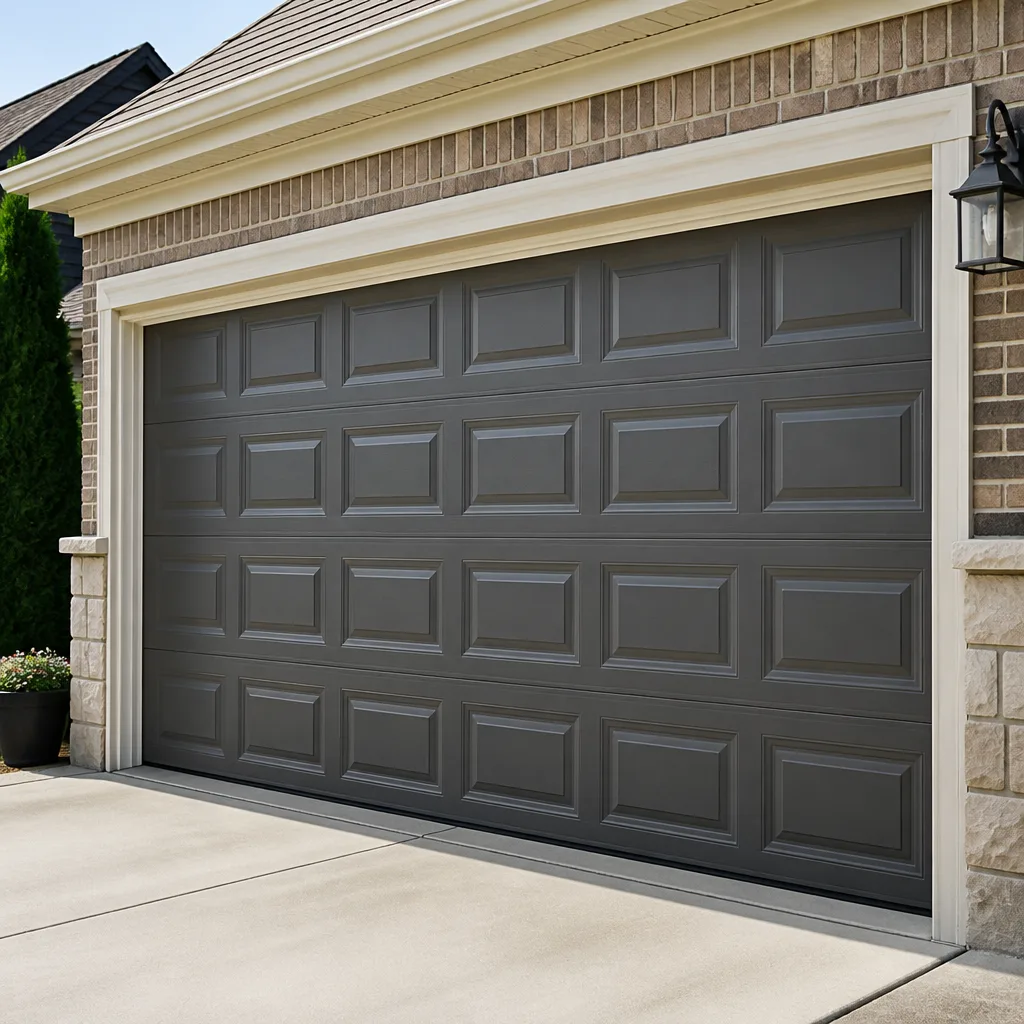 Raised-panel steel
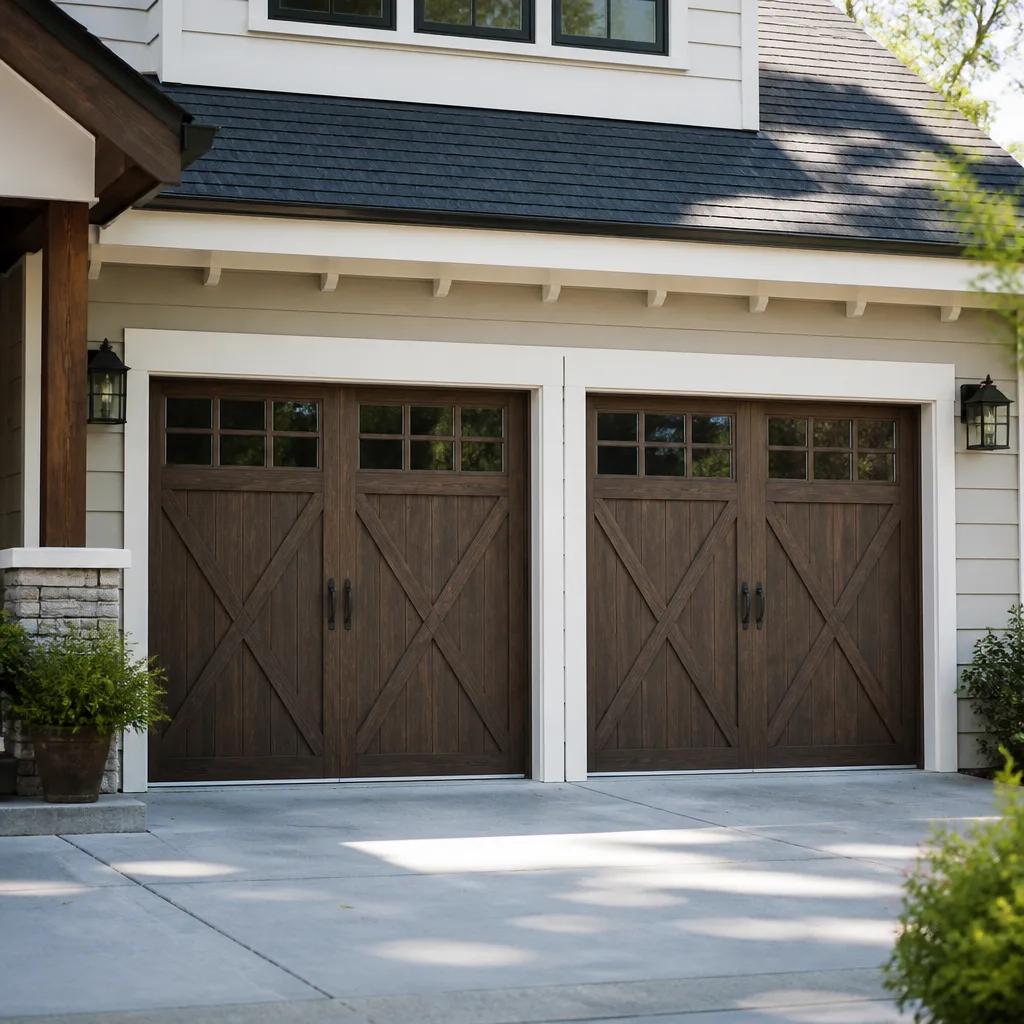 Carriage house
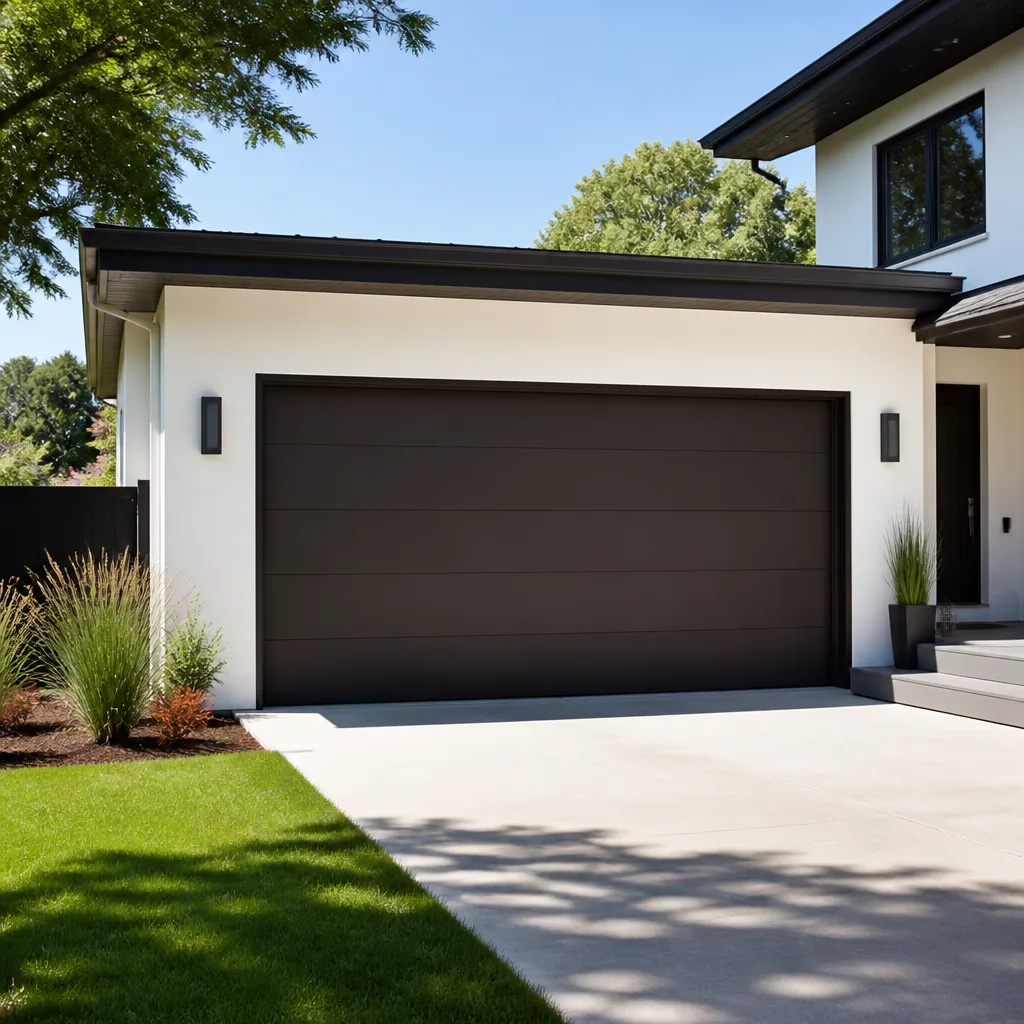 Modern flush
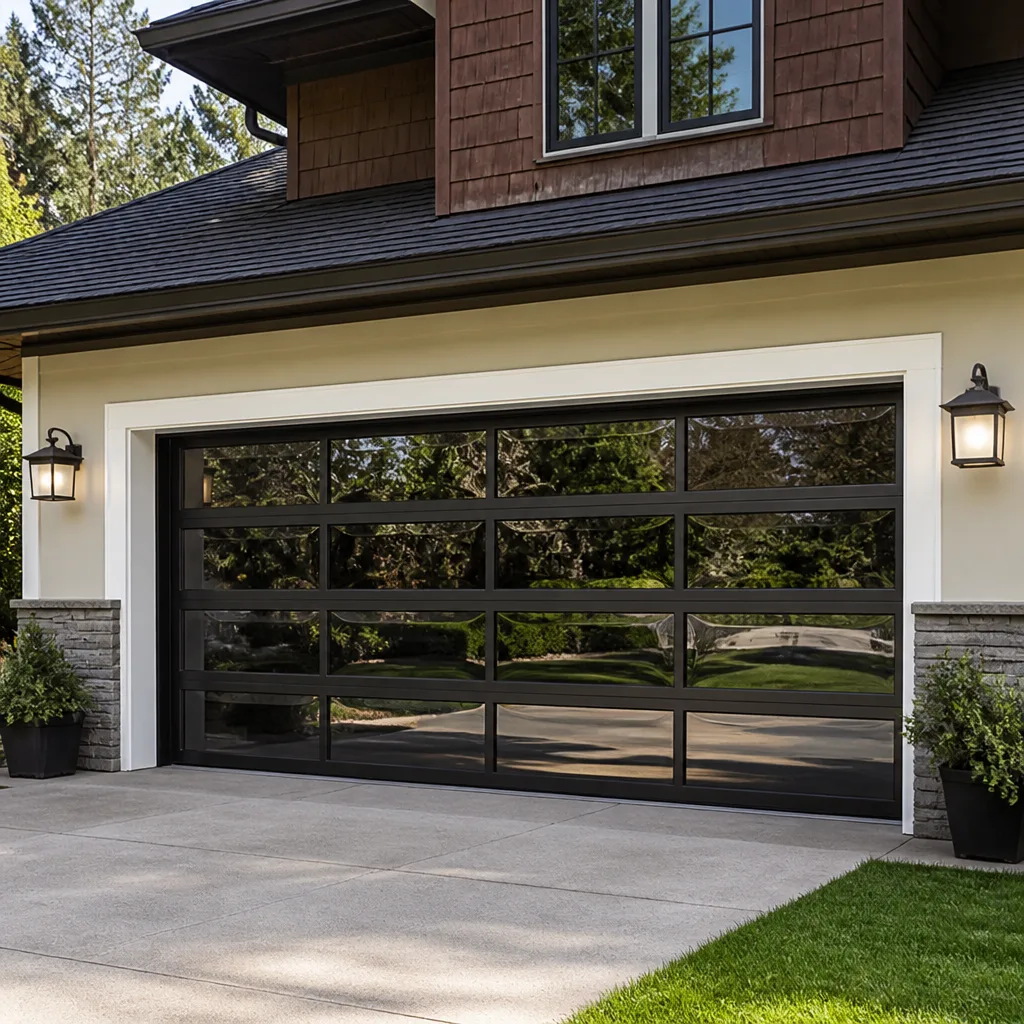 Full-view glass
 LiftMaster openers
 Chamberlain openers
Full 25-point door and opener safety check with every visit - springs, cables, rollers, tracks, and your LiftMaster or Chamberlain opener included
You get a price before we start. It does not change when the truck arrives.
Get your free estimateSeasonal Garage Door Care for Gardena: Year-Round Homeowner’s Guide
Gardena homeowners assume they’re off the hook for seasonal garage door care because “we don’t get real winters.” But your door faces three distinct environmental stress periods every year that cause most of the service calls we see. Late-winter rain, summer heat, and autumn dry winds each create specific failure conditions, and knowing what to watch for in each window prevents most breakdowns before they happen. This guide walks through what actually fails, when, and what to do about it in Gardena’s specific climate, and for a deeper dive, see our complete guide to garage doors in Gardena. By the end, you’ll know which maintenance tasks matter, which ones are overblown, and exactly when to call for professional help.
Styles & brands we work with
- Raised-panel steel
- Carriage house
- Modern flush
- Full-view glass
- LiftMaster openers
- Chamberlain openers
Quick Answer
Seasonal garage door maintenance in Gardena means three focused inspections per year: checking weather seals and panel bottoms after late-winter rain (December through March), testing spring tension and opener function during peak summer heat (June through September), and inspecting cables and track alignment during Santa Ana wind season (September through November). If you can only do one annual task, make it a full cable and spring inspection, ideally performed by a professional who works on your specific door brand; see Choosing the Right Garage Door Brand: A Buyer’s Guide for Gardena for help selecting the right fit. Most homes need about an hour of maintenance twice a year, and the work typically costs between $75 and $150 per visit when professionally performed.
Table of Contents
- Why Gardena’s Climate Is Harder on Garage Doors Than Homeowners Expect
- Late Winter and Early Spring: Rain Season Stress on Seals and Panels
- Summer Heat: Torsion Springs, Opener Overheating, and Metal Expansion
- Santa Ana Wind Season: Cable Fraying, Debris, and Track Alignment
- The One Annual Task That Covers All Three Seasons: Full Cable and Spring Inspection
- Seasonal Drift vs. Actual Repair: How to Tell the Difference
- DIY Seasonal Checklist for Gardena Homeowners
- Common Mistakes to Avoid
- When to Call a Professional
- Frequently Asked Questions
- The Bottom Line
Why Gardena’s Climate Is Harder on Garage Doors Than Homeowners Expect
Gardena sits in a coastal plain pocket where temperatures swing from the mid-40s on winter mornings to the high 80s and low 90s in August, with humidity shifts that most people never notice until a door starts acting up. The city’s proximity to the Pacific means marine air moves through regularly, but the inland position means it burns off faster than in Torrance or Redondo Beach. The result is a microclimate where metal components expand and contract more dramatically than in coastal or desert areas, and where moisture cycles hit surfaces in concentrated bursts rather than steady humidity.
What we regularly see in Gardena that differs from other South Bay cities: steel doors on west-facing garages develop faster surface oxidation than the same door in Carson or Hawthorne, because Gardena gets just enough marine fog to dampen surfaces and just enough afternoon sun to bake that moisture into the finish. Wood doors in the Hollypark and Moneta neighborhoods, many of them original to houses built in the 1950s and 60s, absorb rain-season moisture through worn bottom seals and then dry out during heat spells, causing subtle warping that eventually misaligns the door in its tracks.
None of this is catastrophic on its own. But it’s repeatable, year after year, and it compounds. The door that scrapes slightly in March tends to bind by July. The cable that frays in October snaps in January. Gardena’s climate doesn’t hit hard; it wears down. That’s why a seasonal rhythm matters more here than in places with dramatic temperature swings. You’re not bracing for a freeze; you’re interrupting slow deterioration at predictable intervals.
Late Winter and Early Spring: Rain Season Stress on Seals and Panels
Late-winter rain in Gardena typically arrives in a few concentrated storm systems between December and March, and most moisture damage to garage doors happens not during the rain but in the weeks after, when water has had time to sit against wood, wick into weather stripping, and find its way into panel seams. The most common rain-season problems we see are rotted wood door bottoms, compressed or cracked weather seals, and corrosion starting at the lower edges of steel panels.
Here’s what to check after each significant rain event, and again once the rainy months are done:
- Run your hand along the bottom edge of the door. If the weather seal feels stiff, cracked, or no longer presses evenly against the concrete, moisture has likely been getting underneath. A failed bottom seal is the single fastest way for a wood door to start rotting in Gardena’s rain season.
- Inspect the lowest 12 inches of the door face. On steel doors, look for bubbling paint or small rust spots forming where the panel meets the stile. On wood doors, look for dark staining or softness when you press with a thumb.
- Check the garage floor just inside the door after rain. Moisture pooling here means the seal isn’t making contact. Left through the season, that standing water accelerates concrete spalling and keeps the door bottom damp for weeks.
- Watch the door as it closes. A door that closes with a visible gap on one side after rain often indicates the seal compressed unevenly, or that the door itself shifted slightly due to moisture absorption.
If your door has a Wayne Dalton or Clopay wood-composite construction, pay particular attention to the lower stiles. These brands use engineered wood products that resist rot better than solid wood, but they’re not impervious to standing moisture. Once the facing paint or sealant cracks, water gets inside the composite and causes swelling that’s difficult to reverse. Same applies to Raynor’s wood-look doors, which are popular in older Gardena neighborhoods where homeowners want to preserve a specific architectural look.
The fix for most rain-season findings is straightforward: replace the bottom weather seal, sand and repaint small rust spots before they spread, and adjust door travel limits if the door isn’t seating evenly. These are typically $100 to $200 repairs when handled promptly. Left alone, the same problems become $400 to $800 panel replacements by late spring. Our Garage Door Repair in Gardena team handles seal replacement and panel touch-ups throughout the season, usually in a single visit.
Summer Heat: Torsion Springs, Opener Overheating, and Metal Expansion
Summer in Gardena runs warm rather than scorching, but garages here tend to be poorly ventilated boxes that trap heat well above the outside temperature. A garage door facing south or west on a 90-degree day can push the interior past 110 degrees, and that’s when the mechanical components start behaving differently. The three summer problems we see most often: torsion springs losing consistent tension as metal expands, opener motors overheating and shutting down mid-cycle, and nylon rollers softening or deforming under sustained heat.
Torsion springs are calibrated to specific tension settings, and that calibration assumes a certain operating temperature range. When a garage interior sits above 105 degrees for hours at a time, the steel spring expands enough to alter the tension balance by a small but meaningful margin. It’s rarely enough to fail a spring, but it’s often enough to make a door feel heavier on one side, sit slightly uneven in the opening, or pause on the way up. We see this specifically in detached garages in eastern Gardena neighborhoods, where there’s no house wall to buffer the afternoon sun.
Opener overheating is the other common heat-season complaint. Older LiftMaster and Craftsman units, particularly chain-drive models from the 1990s and early 2000s, have thermal overload protection. When the motor genuinely overheats, it shuts down mid-cycle and won’t restart until it cools. Homeowners often assume the opener has failed entirely and start shopping for replacements. In most cases, the unit is fine; the garage was simply too hot for the duty cycle. We advise our Garage Door Opener Repair in Gardena customers to check two things before calling us out for a no-start in summer: whether the opener runs normally in the cooler morning, and whether the garage interior has any airflow at all.
Fixes for summer issues range from simple to structural. Adding a garage vent or leaving the service door open an hour before sunset reduces interior temperature enough to prevent most opener thermal trips. Re-calibrating spring tension is a professional task, and it’s a judgment call whether it’s worth doing for seasonal drift alone. If you adjust springs for summer, we recommend re-checking them in November once temperatures normalize. One notable summer task that’s genuinely DIY-friendly: wipe down the torsion shaft and spring coils with a light machine oil to prevent surface rust from sweat-condensation cycles, which happen when hot days are followed by cool ocean-air nights.
Santa Ana Wind Season: Cable Fraying, Debris, and Track Alignment
The Santa Ana winds that blow through Gardena from September through November bring two problems: dry, gusting air that accelerates cable wear, and airborne debris that finds its way into tracks, hinges, and sensor paths. The combination causes a specific set of failures that we anticipate every autumn, and homeowners who respond early spend far less than those who wait for a snapped cable.
Lift cables don’t fray from age alone. They fray because something rubs against them inconsistently, and Santa Ana conditions create exactly that pattern. Dry winds carry fine grit, which settles on the cable and then gets pressed into the strands as the cable wraps and unwraps around the drum. Over weeks of this, individual strands start breaking near the drum or the bottom bracket. Once a few strands go, the cable loses strength quickly, and the next heavy cycle shears it. A snapped cable drops one side of the door suddenly, often bending the rail or pulling the door out of the track in the process.
What to check during wind season:
- Visually inspect both lift cables for broken strands, especially near the bottom brackets and the top drums. Broken strands look like small, dark slivers protruding from the cable surface.
- Test the door balance. Disconnect the opener and lift the door manually about waist height. It should stay in place, not drift down or pull up. Drift in wind season often means a cable is starting to stretch unevenly.
- Clear debris from the bottom track channels. Santa Ana gusts push leaves, palm fronds, and plastic litter into tracks. Debris in the track increases force on the rollers and accelerates cable wear.
- Check sensor alignment. Wind-blown debris can bump a safety sensor out of position, causing the door to reverse or refuse to close. This is frequently misdiagnosed as an opener failure.
For most Gardena homes, a cable and track inspection in October catches the problems that would otherwise surface during the first heavy wind event of the season. New cables are relatively inexpensive, typically $180 to $300 installed for standard 7-foot doors. The cost of a snapped cable, with the attendant door realignment or panel damage, usually runs two to three times that. If your door carries a Craftsman or Raynor opener system, make sure the safety sensors are mounted firmly, as these brands’ sensors are particularly prone to subtle vibration drift during wind season.
One more Gardena-specific wind-season note: the city sits in a dust corridor when Santa Anas pick up particulates from the dry riverbed and industrial zones to the east. That dust coats everything in the garage, including the opener’s drive rail. If you have a belt-drive LiftMaster, a thin layer of dust on the belt won’t damage it, but dust on the chain or screw on older units acts as a grinding compound. A quick wipe-down with a dry cloth each October extends the useful life of the opener noticeably.
The One Annual Task That Covers All Three Seasons: Full Cable and Spring Inspection
If you only schedule one garage door maintenance task per year in Gardena, make it a full cable and spring inspection. This single service addresses the cumulative effects of all three seasonal stress periods: rain-season moisture that increases spring coil surface oxidation, summer heat that shifts spring calibration, and wind-season grit that accelerates cable wear. A trained eye can see in ten minutes what would take months of intermittent observation to notice from inside the garage. And because this inspection involves the two components that store the most mechanical energy in your entire home, it’s a job for a professional rather than a trial-and-error weekend project; our Complete Garage Door Repair Guide for Gardena Homeowners explains what to expect.
The inspection itself should cover these specific points:
- Spring coil surface condition. Surface rust on torsion springs is cosmetic until it isn’t. Pitting from Gardena’s moisture-heat cycles creates stress risers that eventually crack the coil. An inspector can tell the difference between ignorable surface rust and pitting that warrants replacement.
- Spring tension balance. Using a manual lift test and measured cycle timing, the inspector verifies whether the springs are still matched to the door’s weight and whether the two-spring system is balanced side to side.
- Cable strand condition at the drum and bracket. This is where 90% of cable failures originate. The inspector looks for broken strands, kinks, corrosion at the crimped end, and uneven seating on the drum.
- Drum wear pattern. Worn drums can cause the cable to stack unevenly, which creates slack on one side and excess tension on the other. This is a subtle failure that most homeowners never notice until the door hangs visibly crooked.
- Bottom bracket integrity. The brackets that anchor the cables to the door bottom take significant load every cycle. Corroded or loosened brackets are a frequent wind-season failure point on older doors in Gardena.
We recommend this inspection every 12 months for most doors, and every 6 months for doors older than 15 years or doors used more than four cycles per day. Many Gardena homeowners combine this inspection with a Garage Door Installation in Gardena consultation when their door is approachng the end of its useful life, since a spring or cable inspection can help clarify whether repair or replacement is the better financial call. The inspection process is quick, and in our experience, about 70% of doors come back with no urgent findings. For the other 30%, the early catch typically saves $200 to $500 compared to waiting for failure.
Seasonal Drift vs. Actual Repair: How to Tell the Difference
Garage doors are mechanical systems, and every mechanical system has a normal operating range. Within that range, minor variations in speed, noise, and balance are seasonal drift: the door reacting to temperature, humidity, and usage patterns. Outside that range, variations signal a component that’s actually failing. Knowing the difference saves Gardena homeowners from unnecessary service calls on one hand, and ignored warning signs on the other.
Here are the signals that point to seasonal drift, which typically resolves on its own or with minor adjustment:
- Door opens slightly slower when the garage interior is below 50 degrees. Cold thickens opener lubricant slightly. Normal.
- Door feels marginally heavier on the first open cycle of the day during cool mornings. Metal springs are stiffer when cold. Normal.
- Rubber weather seal looks compressed or slightly flattened after a summer of heat. The material softens in heat and takes a set. Usually self-corrects in cooler weather.
- Occasional creaking from hinges during very dry wind-season weeks. Lack of humidity increases surface friction. A light lubricant fixes it.
These are the signals that point to genuine repair needs, regardless of season:
- Door consistently drifts down or up when manually opened to waist height and released. This indicates spring tension that’s measurably wrong, not a temporary weather condition.
- Loud bang or snap during operation, followed by one side of the door hanging lower. A spring has broken. This is a repair situation; the door should not be operated manually or automatically until it’s addressed.
- Visible broken strands on either lift cable at any time of year. Cable failure is progressive and does not self-correct.
- Opener shuts down mid-cycle even when the garage temperature is moderate. Thermal trips only happen in heat; persistent shutdowns in cool conditions indicate motor or circuit-board problems.
- Grinding sound from the opener that doesn’t change with temperature. Worn gears or drive components need replacement, not weather adjustment.
The practical test: if the symptom changes with the weather, it’s probably drift. If it’s constant regardless of conditions, it’s probably wear. Either way, when you’re unsure, a professional inspection answers the question definitively. Our team at Garage Door Service Gardena sees both patterns constantly, and a quick look at the door is usually enough to tell drift from damage.
DIY Seasonal Checklist for Gardena Homeowners
Most of this maintenance is fast, safe, and genuinely doable without professional help. What follows is the complete seasonal checklist we recommend, organized by when to do it in the Gardena year. Total time per session: 30 to 45 minutes. Tools needed: a flashlight, a clean dry cloth, silicone spray lubricant, and a step stool. Do not use WD-40 on garage door components; the formulation attracts dust and creates the exact grit problem it’s supposed to prevent.
Late February or early March, after the last heavy rain
- Inspect the bottom weather seal along its full length. Replace it if cracked, stiff, or no longer contacting the floor evenly.
- Check the lowest panel edges for paint bubbling, rust spots, or wood softening.
- Run the door through two full cycles, listening for scraping or grinding that indicates rain-season debris in the tracks.
- Wipe down the garage floor threshold to remove any debris that could prevent the seal from seating.
Late June or early July, before peak heat
- Apply silicone spray to hinges, rollers (not the tracks), and the torsion spring coils. This prevents the friction that heat amplifies.
- Test the opener by running the door through two full cycles in the afternoon heat. If it trips the thermal switch, note which cycle and how hot the garage is.
- Check that the manual release handle operates smoothly, in case a summer power outage or opener failure forces manual operation.
- If your garage faces south or west and has no vents, consider installing a soffit vent or leaving the service door cracked during extreme heat days.
Mid-October, during the first Santa Ana period
- Inspect both lift cables visually for broken strands, especially near the bottom brackets.
- Clear all debris from the bottom track channels and the photoelectric sensor lenses.
- Run a manual balance test: disconnect the opener, lift the door to waist height, and confirm it holds position without support.
- Wipe the opener rail clean with a dry cloth if you have a chain- or screw-drive system.
If any of these checks reveals something you can’t explain or fix, the fastest path is a professional assessment, and you can find more guides & resources on our blog to help you decide. We’d rather look at a door that turned out to be fine than talk to a homeowner who waited until the spring snapped.
Common Mistakes to Avoid
- Skipping the bottom seal inspection because the door “looks fine from outside.” Bottom seal failures are invisible from the exterior and cause slow, expensive wood rot or panel rust in Gardena’s rain season. By the time you see the damage, the panel or bottom section often needs replacement.
- Lubricating the track. The track should never be lubricated. The rollers ride on bearings inside the track, and lubricant on the track surface attracts wind-season grit that accelerates roller wear and increases operating friction. Lubricate hinges, rollers, and spring coils only.
- Adjusting torsion springs without a winding bar. Torsion springs store enough energy to cause serious injury if released improperly. This is the single most dangerous DIY mistake homeowners make in Gardena garages. Spring work is professional work.
- Assuming a tripped opener is broken and replacing the whole unit. Summer thermal trips are common in Gardena garages and usually mean poor ventilation, not a failed motor. A $40 ventilation fix beats a $500 unnecessary replacement.
- Ignoring the annual balance test on a two-year-old door. Newer doors settle into their spring calibration after the first year of use. Skipping the balance test early means a minor spring adjustment becomes a broken spring by year three or four.
- Using household oil on cables. Household oil penetrates between cable strands and traps grit during Santa Ana season, turning the cable into an abrasive stick that grinds against itself. Cables don’t need lubrication; they need inspection.
- Waiting for a second symptom before calling for help. One persistent, weather-independent symptom is enough. A door that grinds every morning regardless of temperature needs attention, not patient observation through another season.
When to Call a Professional
Some seasonal issues are warning shots, and some are the actual failure. Call a professional immediately if you hear a loud bang from the garage (broken spring), see visible broken strands on a lift cable, notice the door hanging crooked or binding hard in the tracks, or experience an opener that shuts down repeatedly regardless of temperature. These are safety situations; a door that falls or a cable that snaps mid-cycle has enough force to damage vehicles, injure people, or warp the door frame. Do not operate the door manually or automatically until the problem is assessed. For everything else: seasonal drift, seal questions, venting advice, or a second opinion on whether a component truly needs replacement, a professional check costs less than a wrong guess. Garage Door Service Gardena offers free estimates in Gardena. Call (866) 562-1805 and we’ll tell you honestly what you’re looking at.
Frequently Asked Questions
Professional seasonal maintenance in Gardena typically runs $75 to $150 per visit, depending on what’s included: a standard inspection plus lubrication and minor adjustments falls at the lower end, while seal replacement or spring tension adjustment pushes toward the higher end. Most homeowners schedule two visits per year, one in early spring and one in mid-autumn, for a total annual maintenance budget of roughly $200 to $300. Call (866) 562-1805 for an exact quote; estimates are free.
Yes, but not because the door needs work every season. Seasonal checks catch progressive failures (cable fraying, seal deterioration, spring surface pitting) before they become sudden failures. In Gardena’s climate, the most expensive repairs are the ones that were visible for four months before something snapped.
For most repairs, yes. We carry common components for LiftMaster, Chamberlain, Genie, Clopay, Amarr, Wayne Dalton, Craftsman, and Raynor systems on the service truck, which means single-visit repair for the majority of failure types. Call (866) 562-1805 and we’ll give you a realistic arrival window and confirm the price before any work starts.
Three signals: the door drifts down or up when manually opened to waist height and released; the door visibly sags on one side when fully open; or the spring coils show surface pitting in addition to the normal gray patina. Any one of these is worth an inspection. None of these should be fixed with a DIY spring adjustment.
No. The price quoted before work begins is the price you pay. If the technician finds additional problems during the repair, those are quoted and approved before any additional work proceeds. Nothing gets done without your say-so, and nothing gets billed without your sign-off.
For most doors under 15 years old, repair is the better financial call, especially when the issue is a spring, cable, seal, roller, or opener component. Replacement makes sense when the door itself has structural damage, the panels are rusted through or badly warped, or you’re planning to sell the house and the door is visibly dated. Our philosophy at Garage Door Service Gardena is to fix the door you have unless replacement is genuinely the smarter path. Call (866) 562-1805 and we’ll give you an honest read either way.
The Bottom Line
Gardena’s garage door stress comes in three predictable waves: rain-season moisture, summer heat, and Santa Ana wind grit. Each wave attacks different components, and each leaves behind evidence that a trained eye can catch early. The homeowners who avoid expensive repairs are the ones who inspect seasonally: seals in March, springs and openers in July, cables and tracks in October. If you only do one thing, do an annual cable and spring inspection. If you’re not sure whether a symptom is drift or damage, get a professional opinion before it becomes a forced decision. The Garage Door Service Gardena home team handles repair, opener repair, and installation for every major brand you’re likely to own. One call covers it.
Written by the team at Garage Door Service Gardena, serving Gardena since 2011.
See the difference
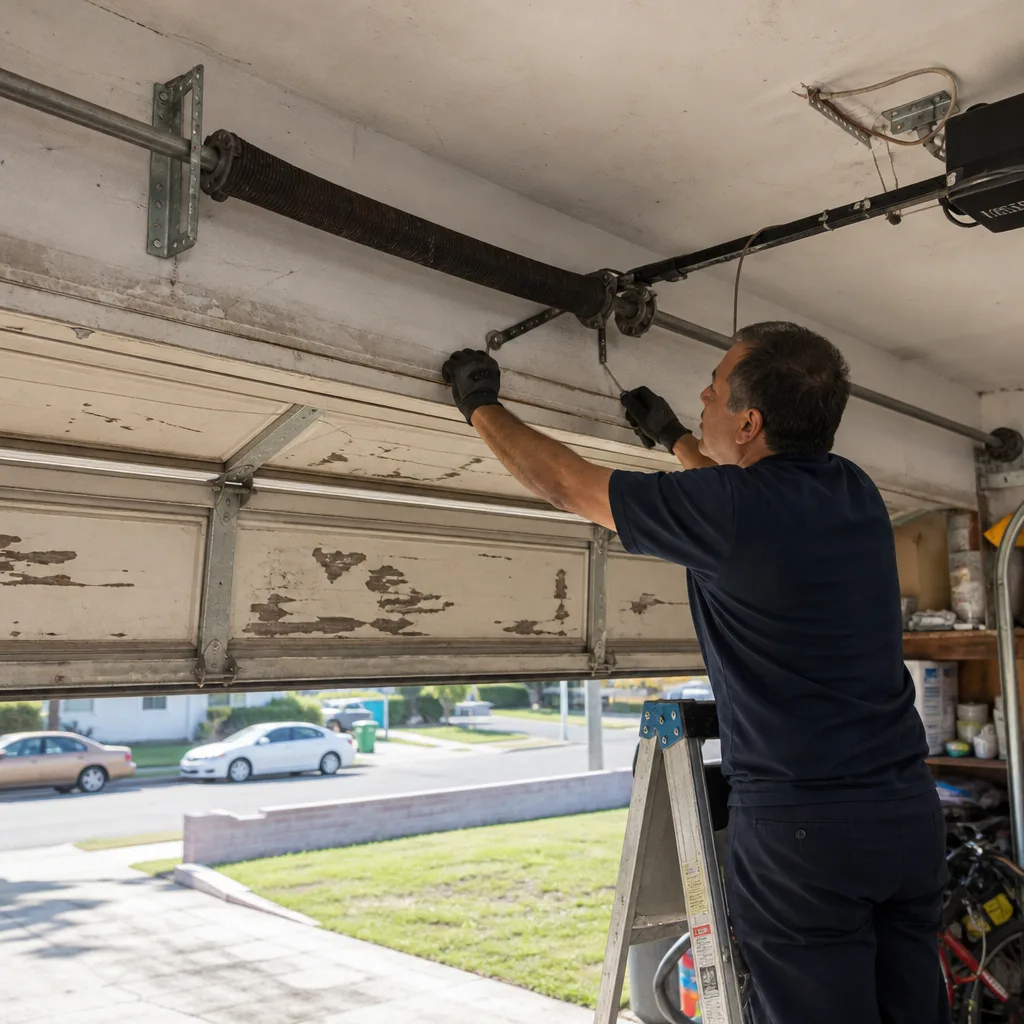 Before
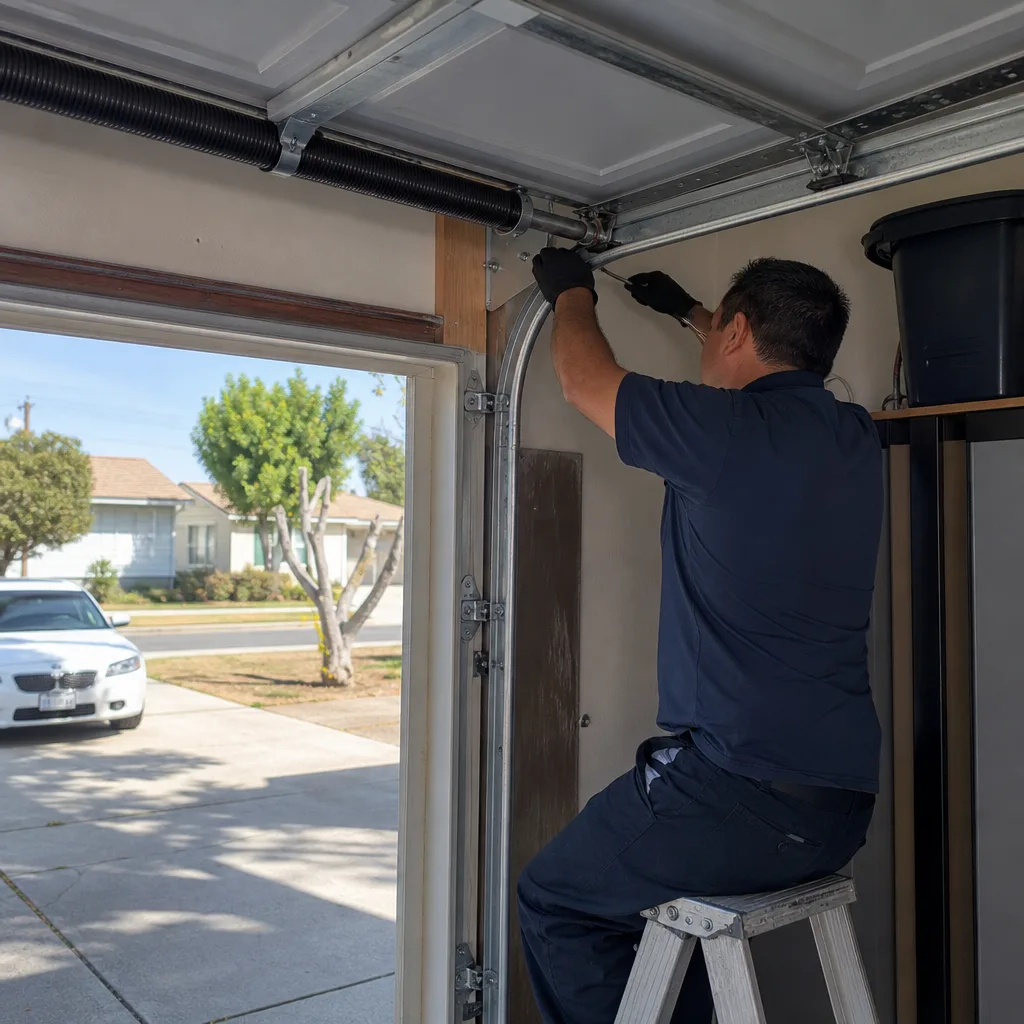 After
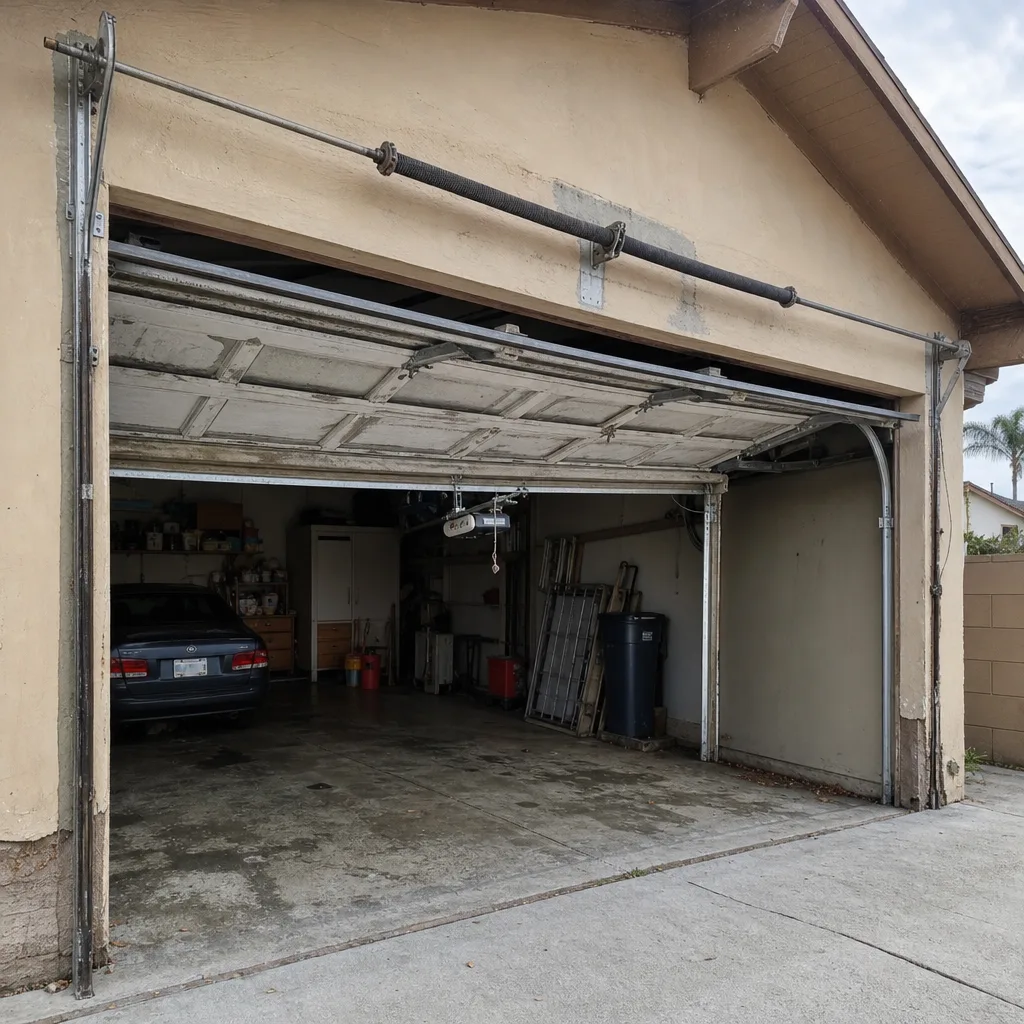 Before
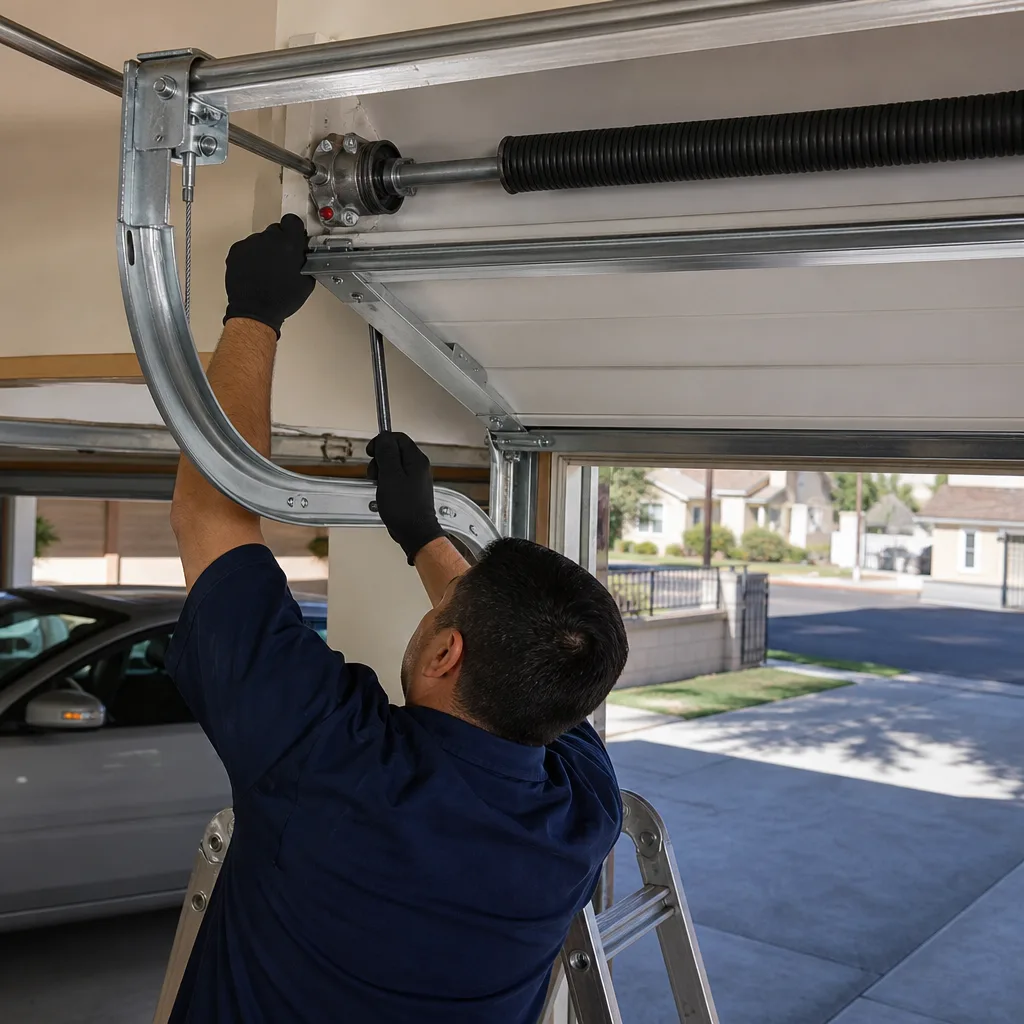 After
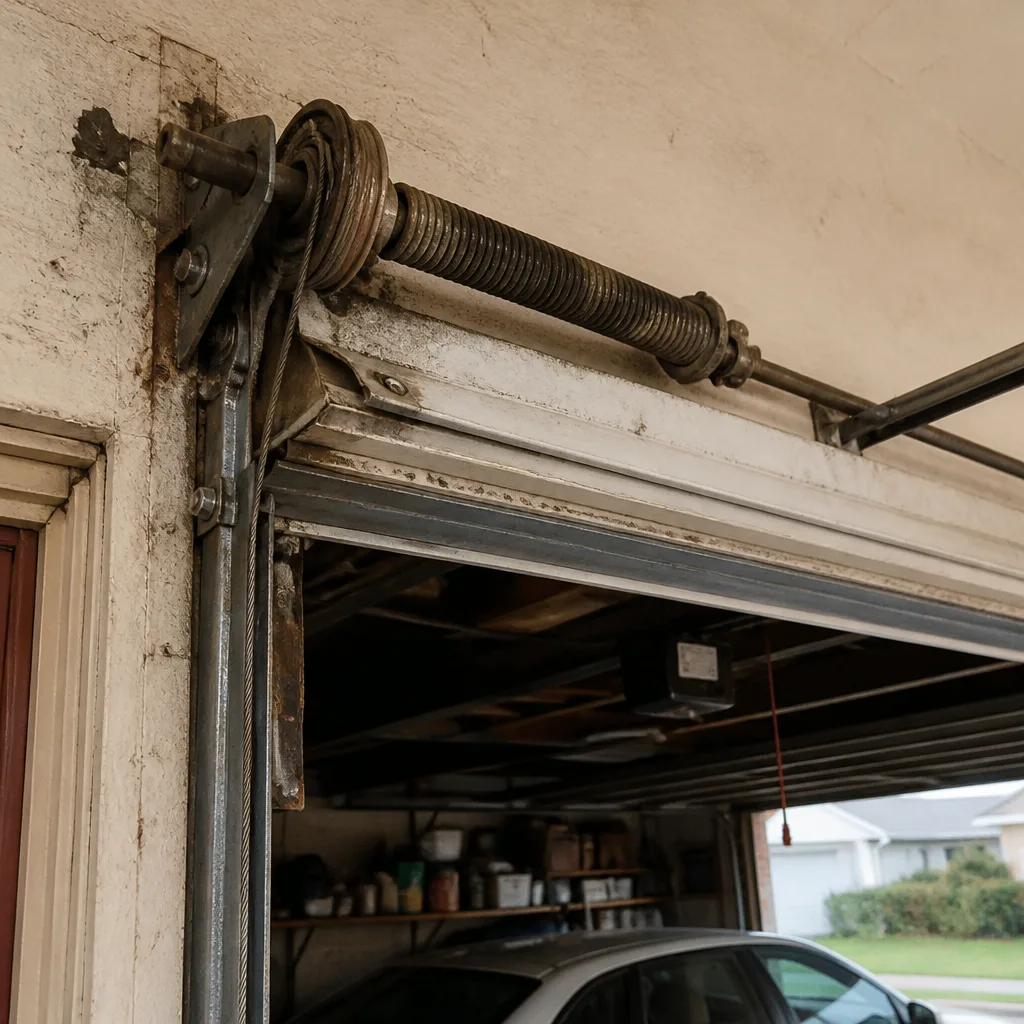 Before
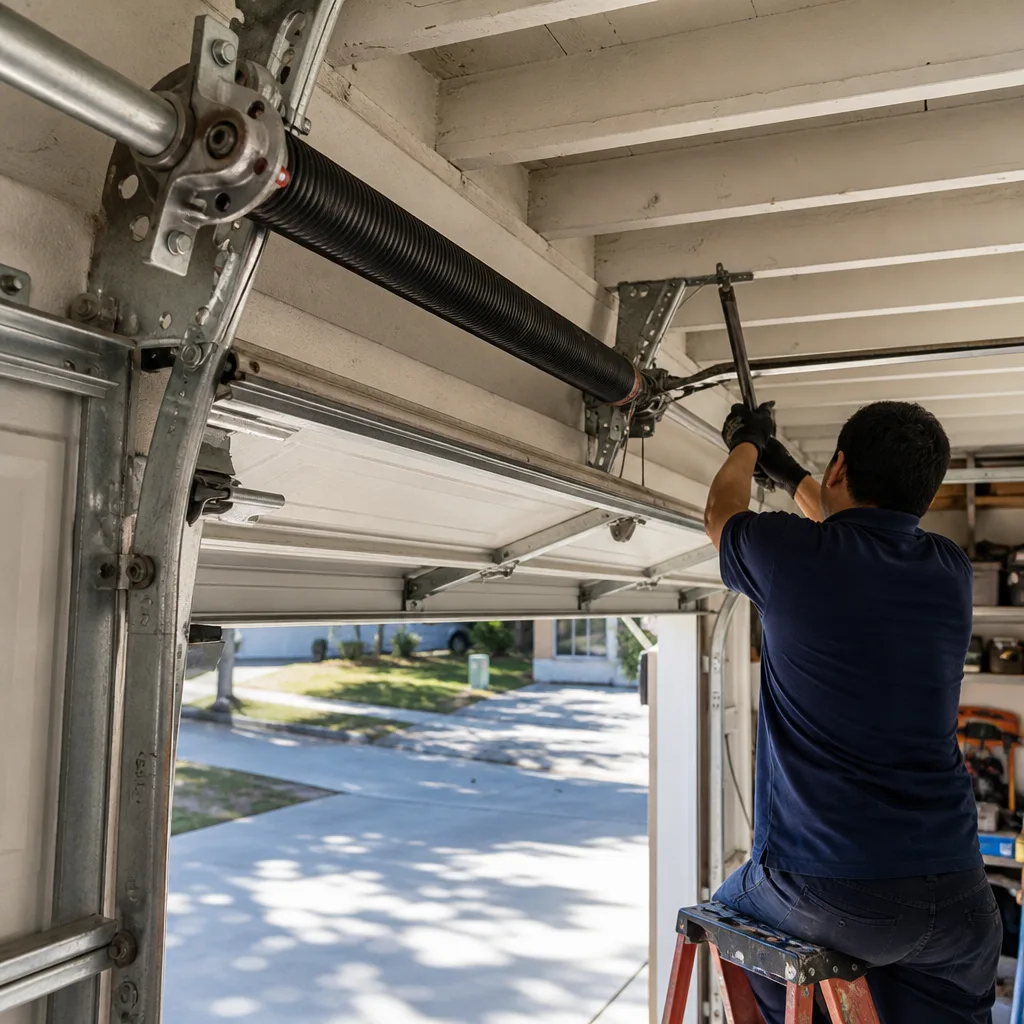 After