
Last updated November 2, 2026
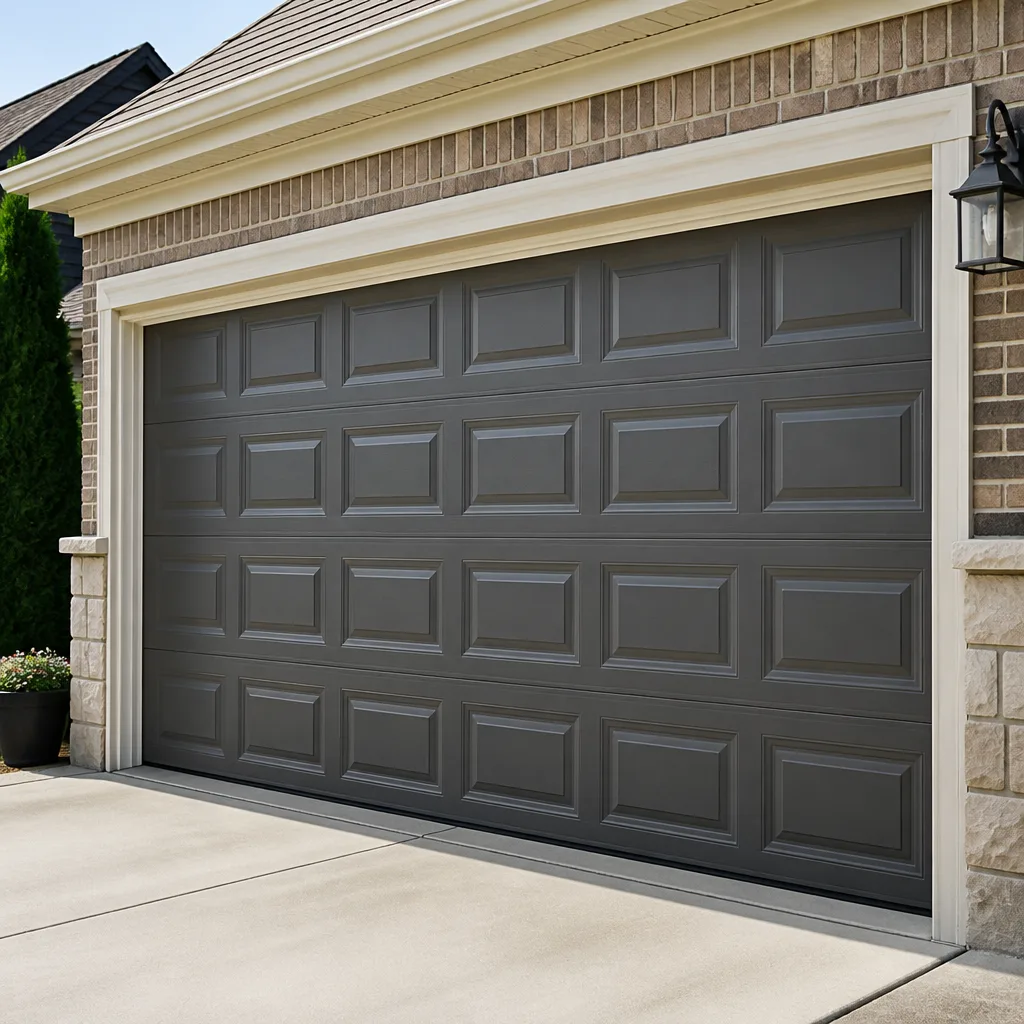 Raised-panel steel
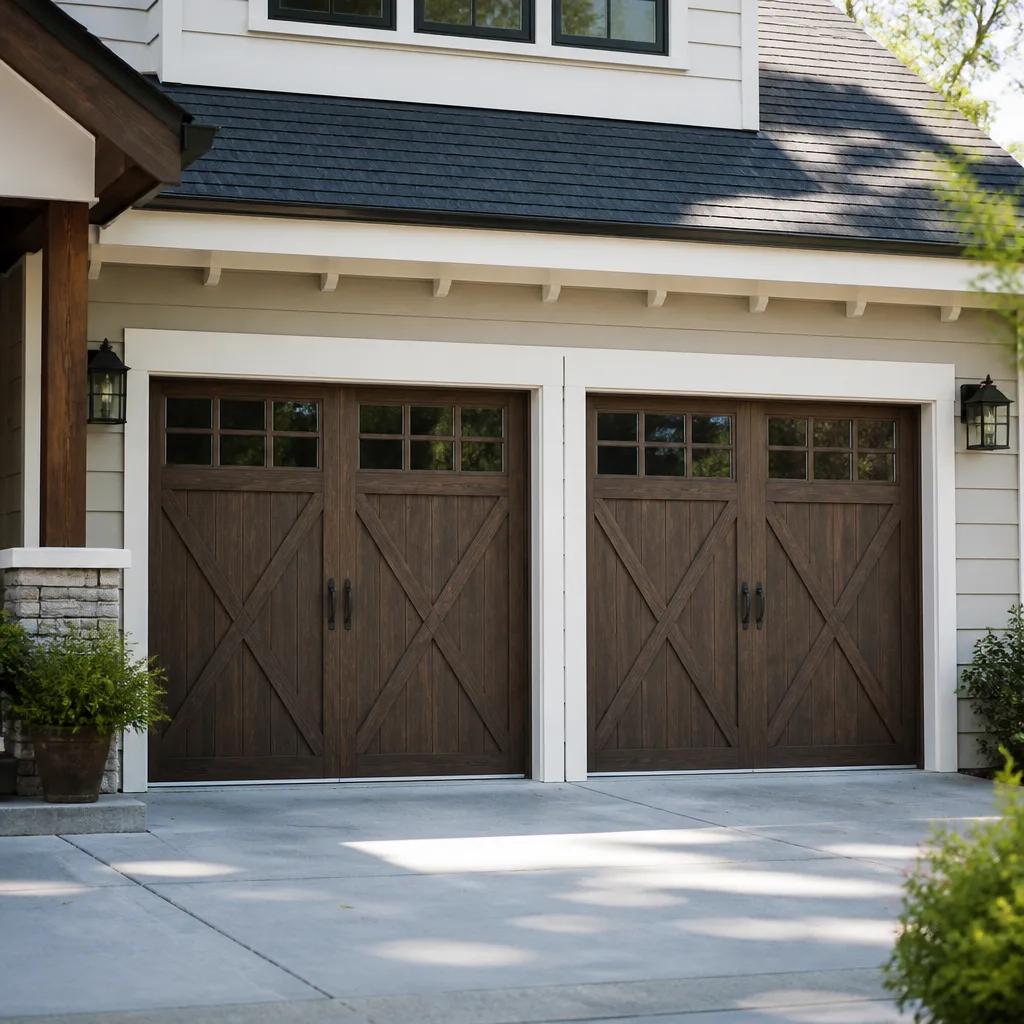 Carriage house
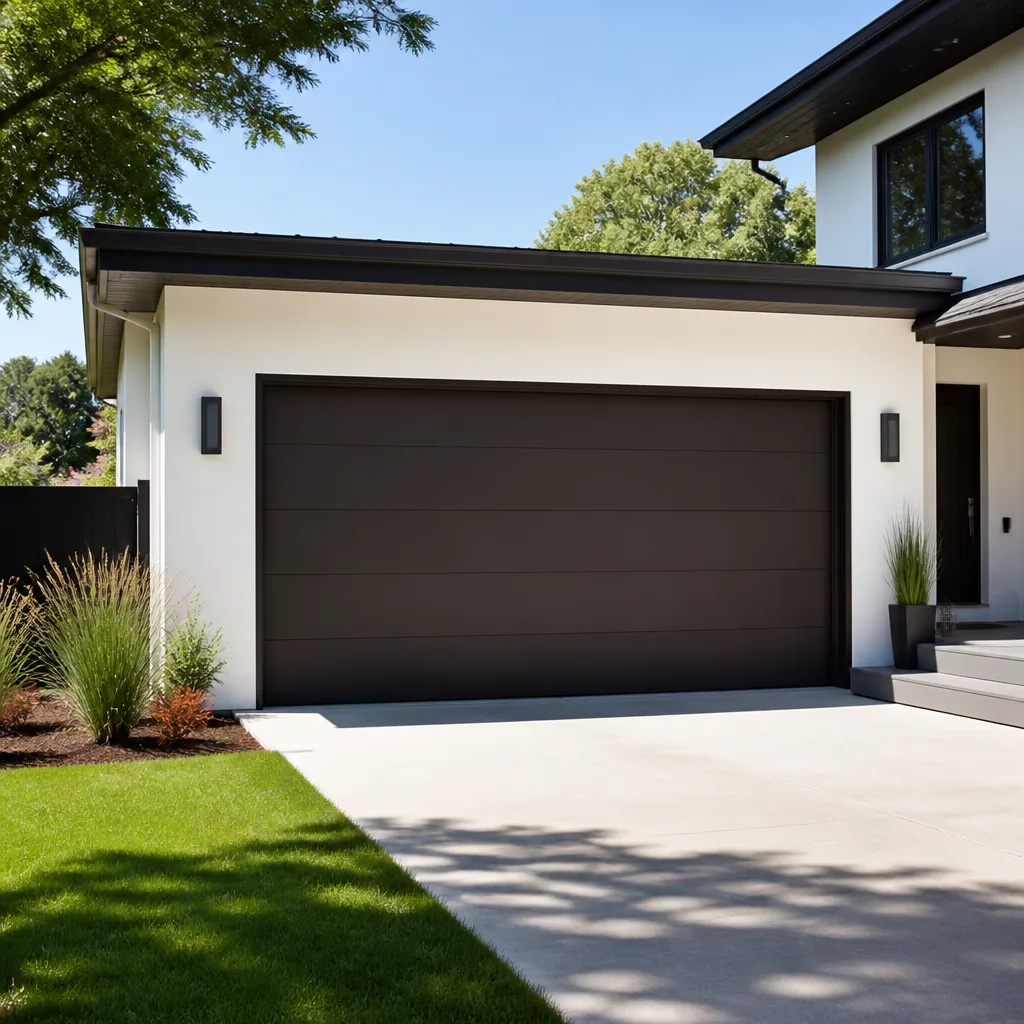 Modern flush
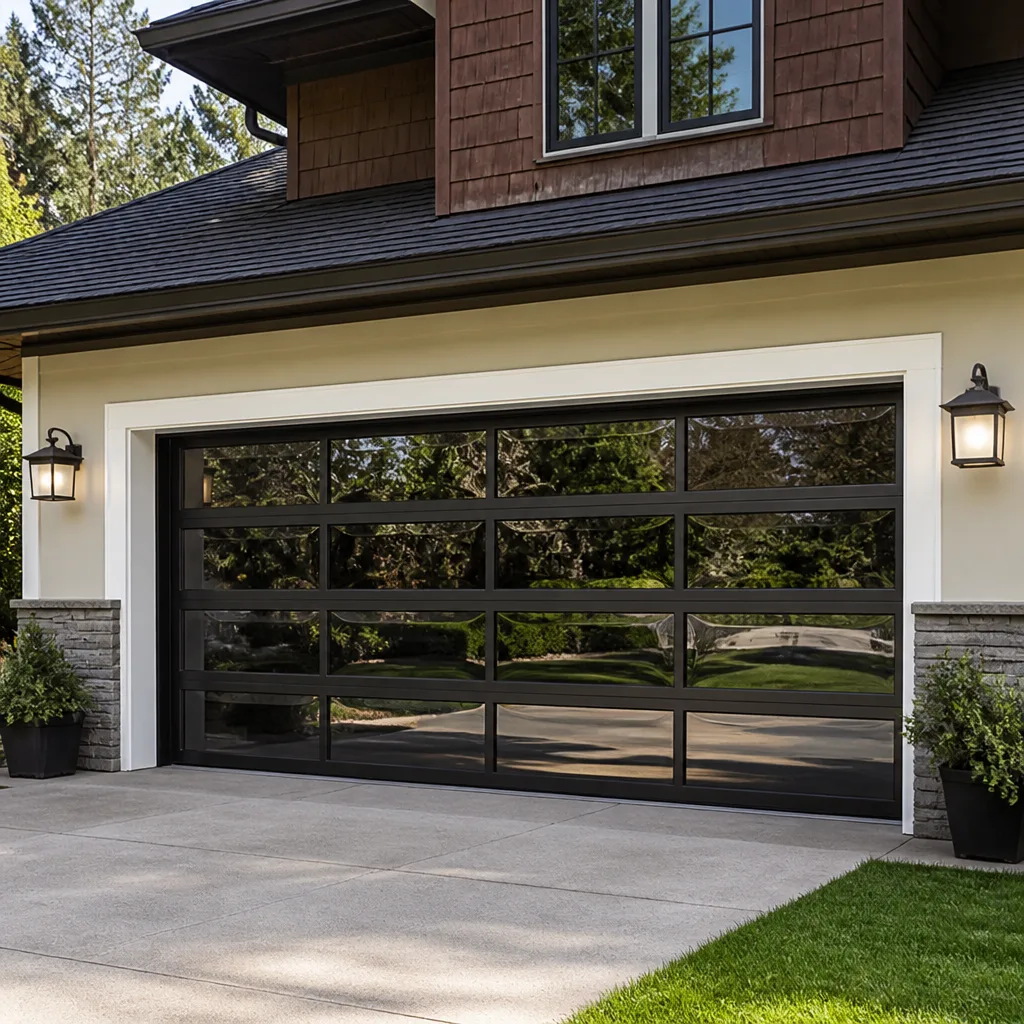 Full-view glass
 LiftMaster openers
 Chamberlain openers
Full 25-point door and opener safety check with every visit - springs, cables, rollers, tracks, and your LiftMaster or Chamberlain opener included
You get a price before we start. It does not change when the truck arrives.
Get your free estimateGarage Door Repair Maintenance Checklist for Gardena Homeowners
The standard “10-point garage door checklist” floating around the internet was written for generic climates. It tells a homeowner in Phoenix and a homeowner in Portland to do the exact same things at the exact same intervals. That’s not maintenance – that’s a template. Gardena sits less than six miles from the Pacific, which means your metal hardware faces salt-laden air that accelerates corrosion in ways landlocked checklists never account for. This guide is built specifically for what actually breaks here, when it breaks, and which tasks you can safely handle yourself versus which ones need a trained tech for professional Garage Door Repair.
Styles & brands we work with
- Raised-panel steel
- Carriage house
- Modern flush
- Full-view glass
- LiftMaster openers
- Chamberlain openers
Quick Answer
A proper garage door maintenance routine for Gardena homeowners should include a monthly visual and sound check, quarterly lubrication of moving metal parts with a silicone-based product, and an annual spring-balance and hardware inspection. Because of Gardena’s coastal-adjacent air, you’ll also need to inspect bottom brackets, hinges, and torsion shaft hardware for salt-accelerated rust every three months – something generic checklists skip entirely.
Table of Contents
- Monthly Maintenance Checklist: What to Look and Listen For
- Quarterly Tasks: Lubrication and Corrosion Checks
- Annual Deep Inspection: Springs, Cables, and Structural Hardware
- How to Test Spring Balance Yourself (The One-Minute Manual Lift Test)
- Lubrication Products That Hold Up in Gardena Conditions
- Which Checklist Items Are Safe for Homeowners vs. Which Need a Licensed Tech
- Brand-Specific Maintenance Notes: Chamberlain, Genie, Clopay, and Amarr
- Gardena Seasonal Considerations: What Spring Fog and Summer Heat Do to Your Door
- Common Mistakes to Avoid
- When to Call a Professional
- Frequently Asked Questions
- The Bottom Line
Monthly Maintenance Checklist: What to Look and Listen For
Monthly checks take about ten minutes and require no tools. The goal is to catch changes before they become failures. In Gardena, where most homes date from the 1950s through the 1980s, doors are often original or second-generation, which means wear patterns are well established and predictable. Here’s what to do every month:
- Run the door through a full open-close cycle and listen. A healthy door makes a consistent mechanical sound. Any new grinding, squealing, or rattling is a signal. Grinding often points to worn rollers. Squealing usually means dry hinges or a dry torsion spring. Rattling suggests loose track bolts.
- Watch the door move. It should travel smoothly with no hesitation, jerking, or visible wobble. If one side lags, the door is binding – often a track misalignment issue.
- Check the safety sensors. Look for blinking indicator lights. A solid light on both sensors means they’re aligned. A flickering or off light means interruption or misalignment. This is the most common cause of an opener that reverses before closing.
- Visually scan the cables. The lift cables on either side should sit snugly in their drums with no visible fraying. Never touch them – just look. Frayed cables snap without warning and are under extreme tension.
- Inspect the weatherstripping along the bottom and sides. Gardena’s damp winter mornings mean water intrusion is a year-round threat. Cracked or brittle stripping lets moisture in and invites rust on the bottom panel.
Doing this monthly builds a baseline. When something changes, you’ll notice it immediately because you know what your door normally sounds like. That familiarity is the single most underrated maintenance tool a homeowner has.
Quarterly Tasks: Lubrication and Corrosion Checks
This is where the Gardena-specific component kicks in. Salt-laden air from the coast travels inland on prevailing westerly winds and settles on exposed metal. The bottom brackets, hinges, and torsion shaft hardware are the first places rust appears. In our experience with garage door repair in Gardena, we regularly see rusted bottom brackets on doors less than five years old, even when the rest of the door looks fine. The reason is simple: those brackets sit closest to the ground, where moisture accumulates and salt residue concentrates.
Quarterly Corrosion Checkpoints
- Bottom brackets: Look for reddish-brown discoloration or flaking. Surface rust can be wire-brushed; deep pitting means replacement is coming.
- Hinges: Check each hinge, especially the bottom two on each side. If they’re stiff or show rust at the pivot point, they’re candidates for replacement.
- Torsion shaft hardware: The bearing plates at each end of the torsion tube collect condensation. Look for rust streaks running down the wall or onto the shaft.
- Track bolts and brackets: The bolts that anchor vertical tracks to the wall are exposed to temperature swings and salt residue. Check for rust around the bolt heads and any loosening.
Quarterly Lubrication Routine
Lubrication is not a “spray everything” exercise. Too much of the wrong product attracts grit and creates a paste that wears parts faster. Stick to these points:
- Rollers: If you have metal rollers, a few drops on the roller stem where it enters the hinge. If you have nylon rollers, apply nothing to the wheel – just a drop where the stem meets the hinge.
- Hinges: One drop at each hinge pivot point. Open and close the door a few times to work it in.
- Torsion spring: A thin coat along the length of the spring. The goal is to prevent rust, not to reduce friction.
- Track: Do not lubricate the track. Contrary to common advice, the rollers don’t slide on the track – they roll. Greasing tracks attracts dust and creates grime. Clean tracks with a dry cloth instead.
Annual Deep Inspection: Springs, Cables, and Structural Hardware
Once a year, set aside thirty minutes for a closer look. This is where you find problems before they become emergencies. The annual inspection covers the parts that do the heavy lifting: torsion springs, extension springs, cables, drums, and the opener drive system.
Annual Inspection Steps
- Check the torsion spring for gaps or uneven coils. A healthy spring has tight, uniform coils. A visible gap or a spring that looks “stretched” in one spot is at the end of its service life. Torsion springs are rated for a specific number of cycles – typically 10,000 for standard springs – and most Gardena homeowners hit that threshold in 7 to 10 years of daily use.
- Examine the lift cables. Look for any individual wire strands that have broken. Even one broken strand means the cable has lost significant strength and needs replacing. Do not attempt to replace cables yourself – the tension involved can cause serious injury.
- Check the drums at the top of the door. The cable should wind evenly onto each drum. If one side has more cable than the other, the door is out of balance and the spring needs adjustment.
- Test the opener’s force settings. Place a 2×4 flat on the ground under the door and close it. The door should reverse within a second of touching the wood. If it doesn’t, the force setting is too high. This test is also part of the spring balance check described below.
- Inspect the opener rail and chain or belt tension. On a Chamberlain or Genie opener, a loose chain creates slack that you can see when the door is in the up position. A belt drive should have a slight flex but never sag. The rail should be clean and free of old grease buildup.
- Examine the door panels themselves. On Clopay and Amarr steel doors, look for rust on the bottom panel first, then check each panel seam. Gardena’s damp air gets into seams where the paint is already compromised.
The annual inspection is also the right time to schedule a professional tune-up if you’ve noticed anything off during your monthly checks. A trained tech can spot things that aren’t visible from the ground and adjust what needs adjusting before it breaks. We do this kind of full-service work regularly – it’s exactly what our Garage Door Service Gardena home page describes in detail.
How to Test Spring Balance Yourself (The One-Minute Manual Lift Test)
A door that’s out of balance forces the opener to work harder, which shortens its life and increases the risk of a spring failure at the worst possible moment. The manual lift test tells you in sixty seconds whether your springs are doing their job. Here’s how it works:
- Disengage the opener. Pull the red emergency release cord while the door is in the down position. This disconnects the door from the opener’s drive system.
- Lift the door manually to waist height. Use the handle or the bottom edge. The door should lift smoothly with moderate effort – not too heavy, but with some resistance.
- Let go. A properly balanced door stays put at waist height. It doesn’t drift up, and it doesn’t fall down.
- Interpret the result. If the door falls, the springs are under-tensioned or worn and need adjustment or replacement. If the door rises on its own, the springs are over-tensioned. Either condition puts strain on the opener and should be corrected.
This test is safe because you’re never touching the spring itself. But if the test reveals a problem, do not attempt to adjust the spring. Torsion springs store enormous mechanical energy, and a mistake during adjustment can cause severe injury. This is one of the clearest cases for calling a professional.
Lubrication Products That Hold Up in Gardena Conditions
Not all lubricants are created equal, and Gardena’s environment makes the choice more important than most people realize. The coastal air contains enough salt and moisture to degrade some products rapidly while others hold up fine. Here’s what we’ve learned from working on doors throughout the South Bay:
- Use a silicone-based garage door lubricant. Products designed specifically for garage doors – like the spray lubes sold at home centers – are silicone or lithium-based and won’t attract dust. They’re the right choice for springs, hinges, and roller stems.
- Avoid WD-40 for lubrication. WD-40 is a solvent and water displacer, not a lubricant. It works great for cleaning and rust prevention, but it evaporates quickly and leaves metal dry.
- Skip heavy greases. White lithium grease works in some applications, but in Gardena, heavy grease on tracks or springs picks up airborne dust and salt. That creates a grinding paste that accelerates wear.
- For rust prevention on springs and hardware, a dedicated rust-inhibiting spray applied quarterly is worth the extra five minutes. Springs that rust lose strength and fail early.
The right product matters less than the right frequency. A quarterly lubrication routine with the proper silicone-based spray does more for your door’s longevity than an annual soak with the wrong product.
Which Checklist Items Are Safe for Homeowners vs. Which Need a Licensed Tech
We believe homeowners should handle what they can safely handle. The monthly visual checks, the manual lift test, lubrication, weatherstripping replacement, and sensor cleaning are all well within a homeowner’s wheelhouse. But some tasks cross a line. Here’s the breakdown:
Safe for Homeowners
- Monthly visual and sound inspection
- Manual spring balance test
- Quarterly lubrication with silicone-based spray
- Cleaning tracks with a dry cloth
- Checking safety sensor alignment and wiping the lenses
- Replacing bottom weatherstripping
- Tightening visible bolts on the track brackets
Call a Professional
- Spring adjustment or replacement: Torsion springs are under extreme tension. A failed adjustment can send a winding bar flying with enough force to cause serious injury. This is the number one rule of garage door safety.
- Cable replacement: Cables under tension snap violently when mishandled. Never attempt this yourself.
- Track realignment: Adjusting tracks requires precision and specialized tools. A misaligned track can cause the door to bind and the opener to struggle.
- Opener repair involving the drive system or logic board: If the issue isn’t a sensor alignment or a remote battery, it’s likely a motor, gear, or board problem. Those require diagnostic experience.
- Panel replacement on a loaded door: A broken panel changes the door’s weight distribution. Replacing it correctly is more involved than it looks.
The line between DIY and professional is really about energy storage. Anything involving springs, cables, or tracks has stored or mechanical energy that can cause injury. The garage door opener repair in Gardena work we handle daily involves diagnosing those electronic and drive-system issues that aren’t safe for a homeowner to open up.
Brand-Specific Maintenance Notes: Chamberlain, Genie, Clopay, and Amarr
Different brands fail in different ways. Knowing what to watch for on your specific equipment makes your maintenance routine far more effective. We work on all of these systems regularly, which means we see the failure patterns that brand-specific guides and even our own Garage Door Repair Troubleshooting: Common Problems and How to Fix Them tend to gloss over.
Chamberlain Openers
Chamberlain is the most widely installed opener brand in the United States, and Gardena is no exception. The most common issues we see are worn drive gears in chain-drive models and logic board failures in units over seven years old. Maintenance-wise, the gear check is the key one: when the opener starts making a grinding sound during operation, the plastic drive gear is stripping. Replacing it before it fails completely is cheaper than waiting. Chamberlain’s safety sensors are also sensitive to direct sunlight – a Gardena issue on south-facing garage doors, where afternoon sun can trigger false sensor interruptions. A simple sun shield or slight repositioning usually solves it.
Genie Openers
Genie openers, particularly the screw-drive models, have a distinctive failure pattern: the carriage wears down over time, creating slop in the connection between the screw and the door. You’ll hear it as a rattling sound during operation. Screw drives also need more frequent lubrication than belt or chain drives – a dry screw creates friction that wears the carriage faster. In Gardena’s damp winters, condensation can cause surface rust on the screw, which accelerates carriage wear. A quarterly check of the screw for rust and debris catches this early.
Clopay Doors
Clopay steel doors are common throughout the South Bay. The maintenance watchpoint with Clopay is the bottom panel, which takes the brunt of moisture exposure. Inspect the inside bottom edge regularly for rust bubbling under the paint. Once rust starts in a panel, it spreads. Clopay also uses a specific hinge design that can bind if lubricated improperly – silicone spray on the pivot point only, never oil on the hinge face.
Amarr Doors
Amarr doors, particularly their carriage-house and insulated steel lines, use a torsion spring system that’s slightly different from other manufacturers. The spring sits in a tube, which makes visual inspection trickier – you can’t always see coil gaps. The telltale sign of a failing Amarr spring is a door that feels suddenly heavy during the manual lift test. If your Amarr door fails the balance test, call a professional rather than trying to diagnose the internal spring yourself.
If you’re considering a new door rather than continued maintenance on an old one, our garage door installation in Gardena service covers Clopay, Amarr, Wayne Dalton, and Raynor – but we’ll always tell you honestly whether your current door is worth repairing first.
Gardena Seasonal Considerations: What Spring Fog and Summer Heat Do to Your Door
Gardena doesn’t have dramatic seasons, but it does have distinct weather patterns that affect garage door hardware in specific ways. Understanding them helps you time your maintenance correctly.
Spring fog (May through early July): The marine layer that rolls through the South Bay in late spring and early summer brings consistent moisture without rain. This is the most corrosive period of the year for exposed metal. Water condenses on garage door hardware overnight and doesn’t burn off until late morning. Salt particles from ocean air dissolve into that moisture, creating a mild saline solution that sits on your springs, hinges, and brackets for hours. Your quarterly corrosion checks are most important during this window. If you only do one thorough inspection per year, do it in late June, after the fog season peaks.
Summer heat (July through September): Gardena’s inland position relative to the beach means summer temperatures regularly hit the high 80s and low 90s – warmer than the beach cities. That heat affects garage door balance in a subtle way: metal components expand, which can temporarily change how the door sits in the tracks. If your door sticks slightly in the summer but works fine in winter, thermal expansion is the likely culprit. That’s not a reason to adjust anything – it’s just something to be aware of before you call a tech for a door that’s “binding” only on hot afternoons.
Winter rain (December through March): Gardena gets the bulk of its annual rainfall between December and March. While snowfall isn’t a concern, prolonged wet periods test your weatherstripping and bottom seal. Water that pools at the base of the door accelerates rust on the bottom brackets. After a heavy rain, do a quick visual check of the brackets and bottom panel – the same check you do quarterly, but timed to the weather.
Common Mistakes to Avoid
- Lubricating the track. This is the most common garage door mistake we see in Gardena. Rollers roll on the track – they don’t slide. Grease or oil on the track attracts dust and road grime that’s constantly in the air near the 405 and 110 corridors. The result is a sticky black sludge that causes more problems than it solves.
- Using WD-40 as a lubricant. It’s a solvent, not a lubricant. It cleans, but it also strips whatever lubricant was there. Within a few weeks, the metal is dry and noisier than before.
- Ignoring a noisy door. A door that suddenly starts squealing or grinding is sending a signal. Ignoring it for months is how a $40 roller replacement becomes a $400 spring or opener repair. Sound changes are the earliest warning sign of mechanical problems.
- Attempting a spring adjustment based on a YouTube video. We cannot emphasize this enough: torsion springs store enough energy to cause life-altering injuries. No maintenance checklist item justifies the risk of doing this yourself.
- Replacing the opener when the door is the problem. A struggling opener is frequently a symptom of an unbalanced door. If your door fails the manual lift test, a new opener won’t fix the underlying issue – it’ll just wear out faster than the old one.
- Forgetting to re-engage the opener after the manual lift test. It sounds obvious, but it happens. The door won’t open with the remote, and the homeowner assumes the opener is broken. Check the emergency release cord position before calling for service.
- Skipping sensor checks because the door “works fine.” Sensors can drift out of alignment slowly. The door still closes because the opener compensates, but the safety reversal feature isn’t working properly. Test sensors monthly, not just when the door misbehaves.
When to Call a Professional
Some situations are simply beyond the scope of a maintenance checklist. If you hear a loud bang that sounds like a gunshot coming from your garage, that’s a spring snapping – stop using the door immediately and don’t try to open it manually. If your door starts reversing unexpectedly, that’s a sensor or force-setting issue that needs diagnostic attention. If you see any frayed cables, visible gaps in a torsion spring, or a door that droops to one side, those are structural problems that will get worse without repair. If your opener makes a grinding sound and the door moves slowly or not at all, the drive gear or motor is failing. All of these are jobs for a trained technician. Garage Door Service Gardena offers free estimates in Gardena – call (866) 562-1805 and we’ll diagnose the issue and give you an honest answer about what needs fixing and what doesn’t.
Frequently Asked Questions
A professional garage door tune-up in Gardena typically runs between $85 and $150, depending on the door type and what’s included. The cost is almost always less than the repair it prevents – a tune-up that catches a failing spring before it snaps saves you $200 to $400 in emergency service fees. Call (866) 562-1805 for a free estimate on maintenance work in Gardena.
A door that feels heavy during a manual lift, a door that only opens halfway, or a visible gap in the spring coils all indicate a spring nearing the end of its life. You may also hear a loud bang when the spring actually breaks. If you notice any of these signs, stop using the door and call a professional – a broken spring makes the door dangerously heavy to lift manually.
Yes – most of the monthly and quarterly items on this checklist are safe for homeowners to handle: visual inspections, lubrication, sensor cleaning, and the manual balance test. The line is drawn at anything involving springs, cables, or track adjustments, which carry serious injury risk and require a trained tech.
Every three months, using a silicone-based garage door lubricant. Gardena’s coastal-adjacent air dries out moving parts and accelerates rust, which means quarterly lubrication is more important here than in inland areas where the climate is drier and cleaner.
Belt-drive openers, common on Chamberlain and Genie models, use a reinforced rubber belt that requires almost no maintenance and runs quieter. Chain-drive openers use a metal chain that needs occasional tension adjustment and can stretch over time. Both types benefit from annual rail inspection, but chain drives need slightly more attention.
Morning squeaks are typically caused by nighttime condensation settling on the hinges and springs. In Gardena, the marine layer brings moisture in overnight, and the squeak disappears once the morning air dries out. This is a signal that your lubrication is wearing thin – a fresh application of silicone spray usually eliminates the noise.
The Bottom Line
Garage door maintenance in Gardena is not a once-a-year project. It’s a rhythm: ten minutes monthly to look and listen, thirty minutes quarterly to lubricate and inspect for salt-driven corrosion, and a deeper annual inspection that catches what the smaller checks don’t. The environment does half the work against you – salt air, morning fog, and damp winters all conspire to rust and wear your hardware faster than a generic checklist assumes. The other half is what you do about it. Stay consistent with the routine, respect the line between DIY and professional work, and your door will outlast your expectations. And when something does go wrong, call (866) 562-1805 – a free estimate and an honest diagnosis are always the right first step. For more guides & resources, visit our blog.
Written by the team at Garage Door Service Gardena, serving Gardena since 2011.
See the difference
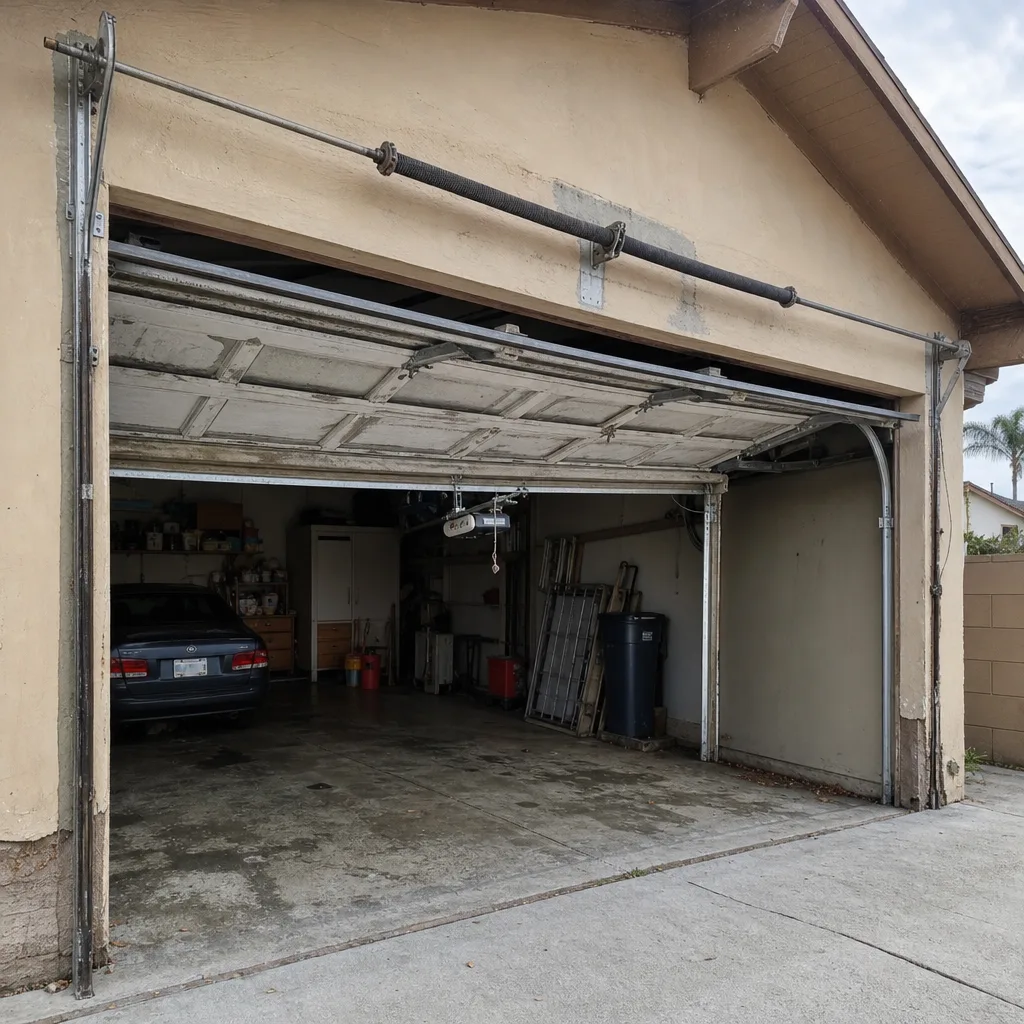
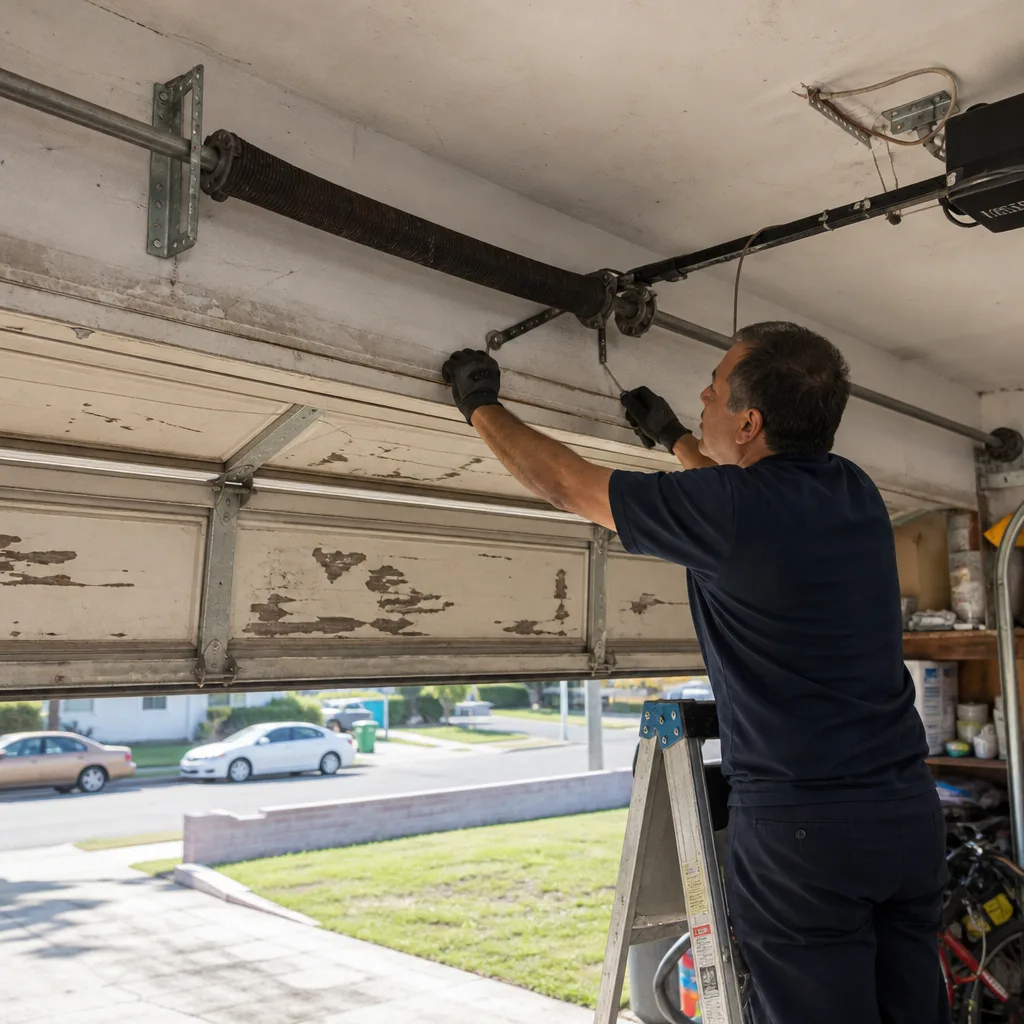 Before
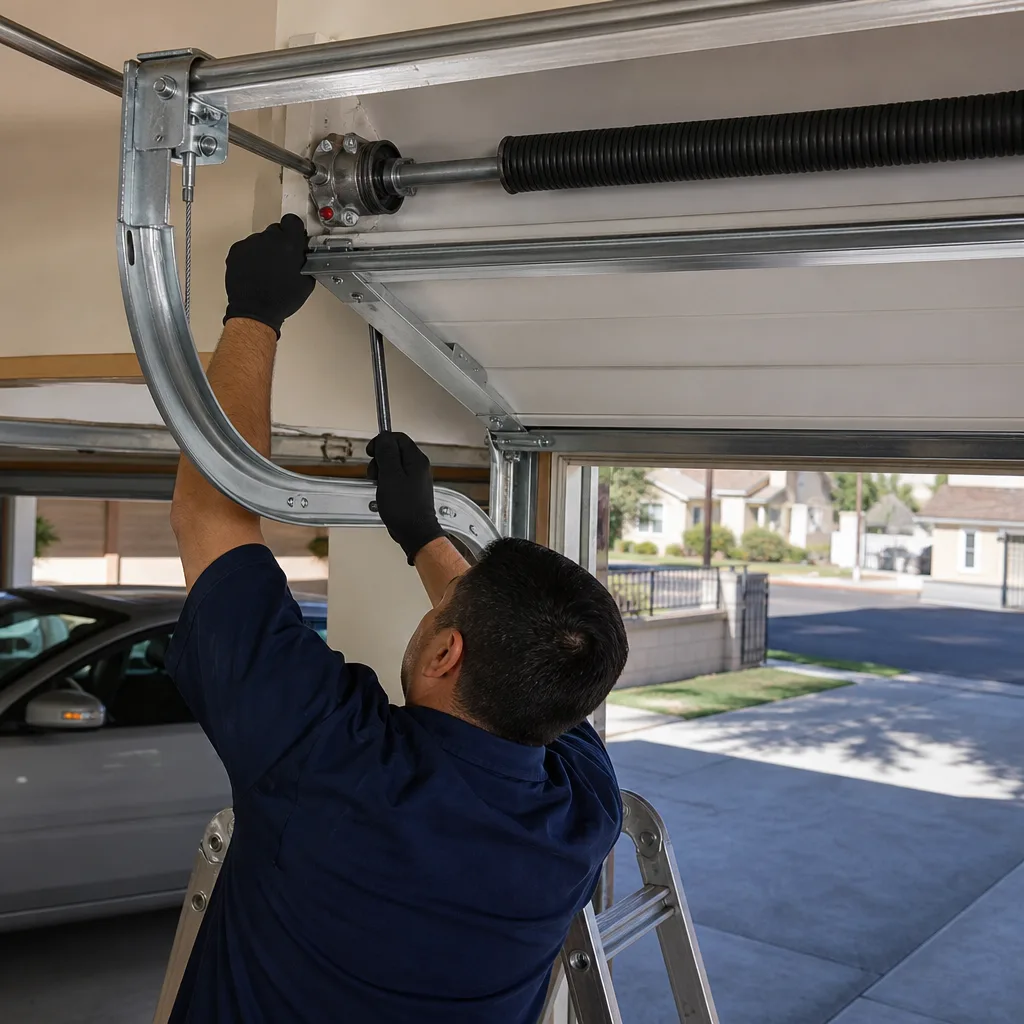
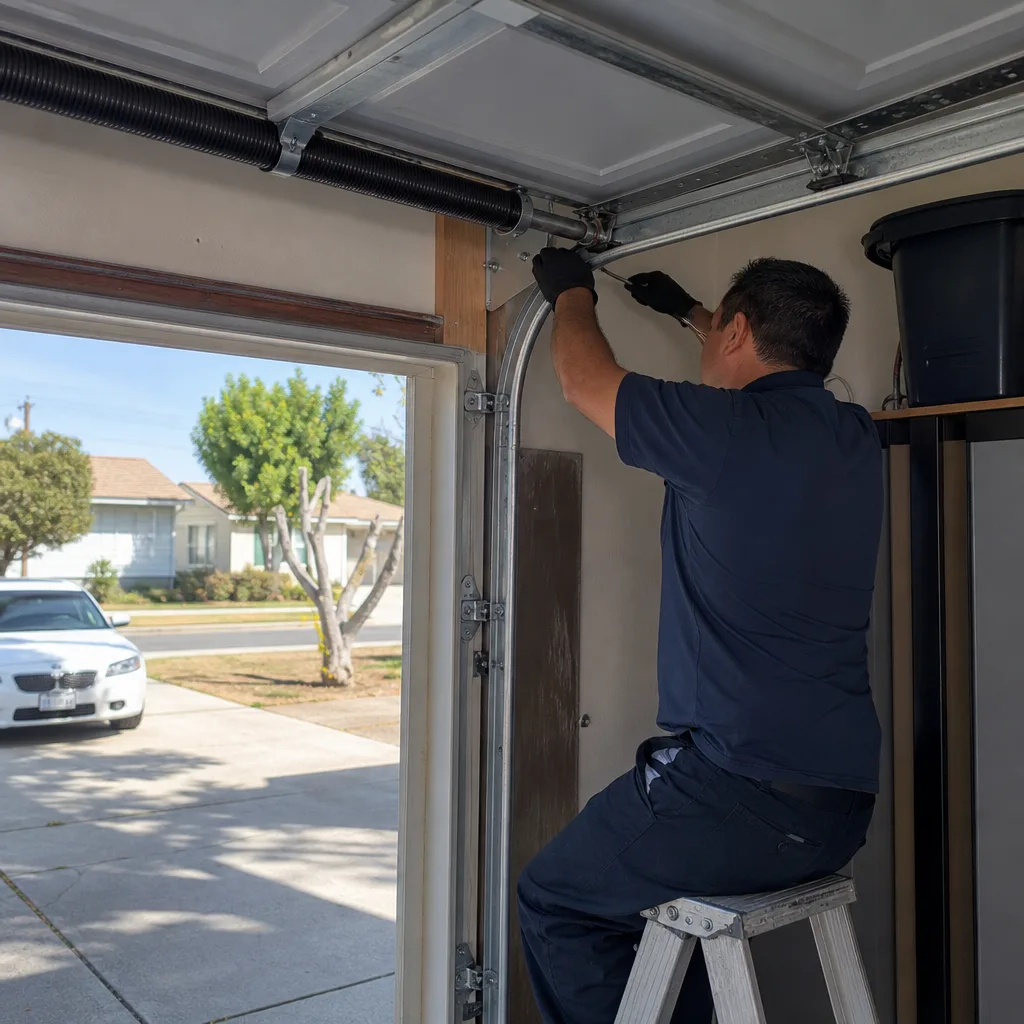 After
 Before
 After
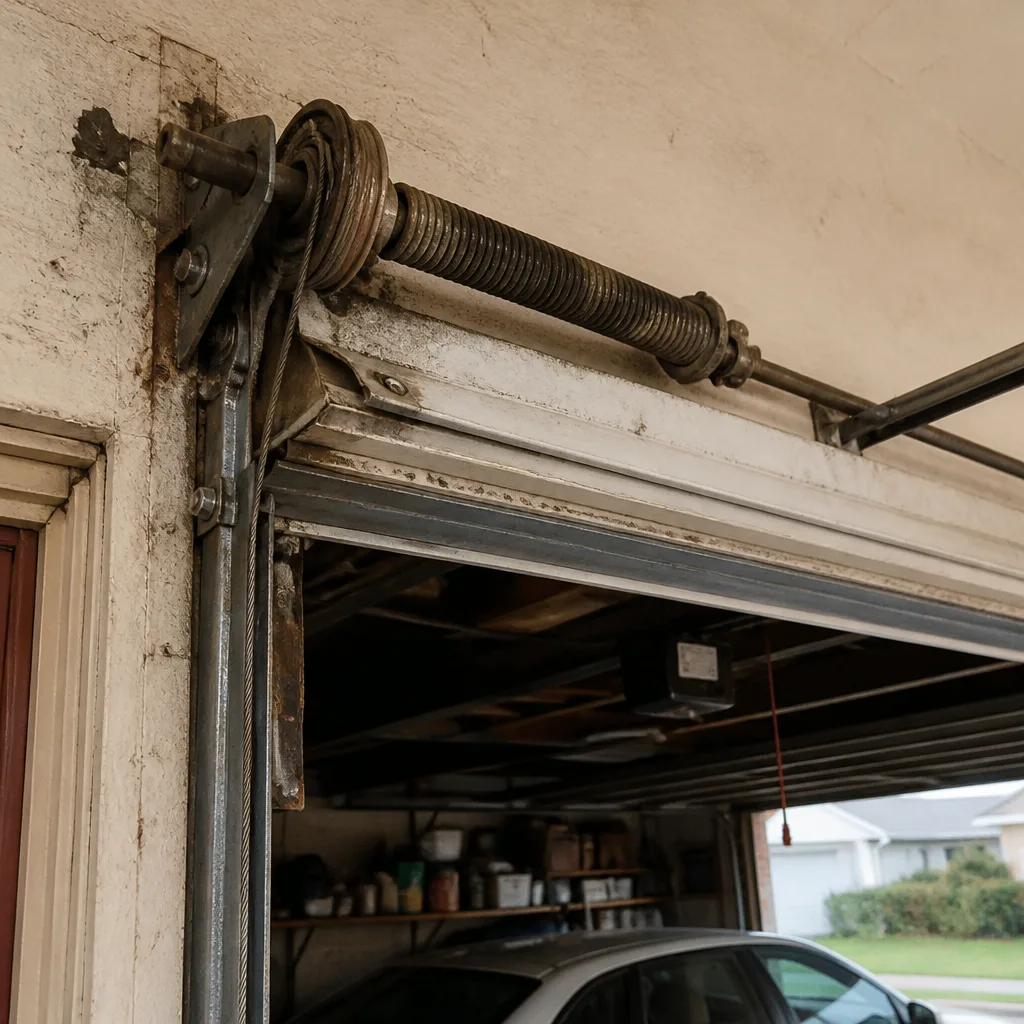 Before
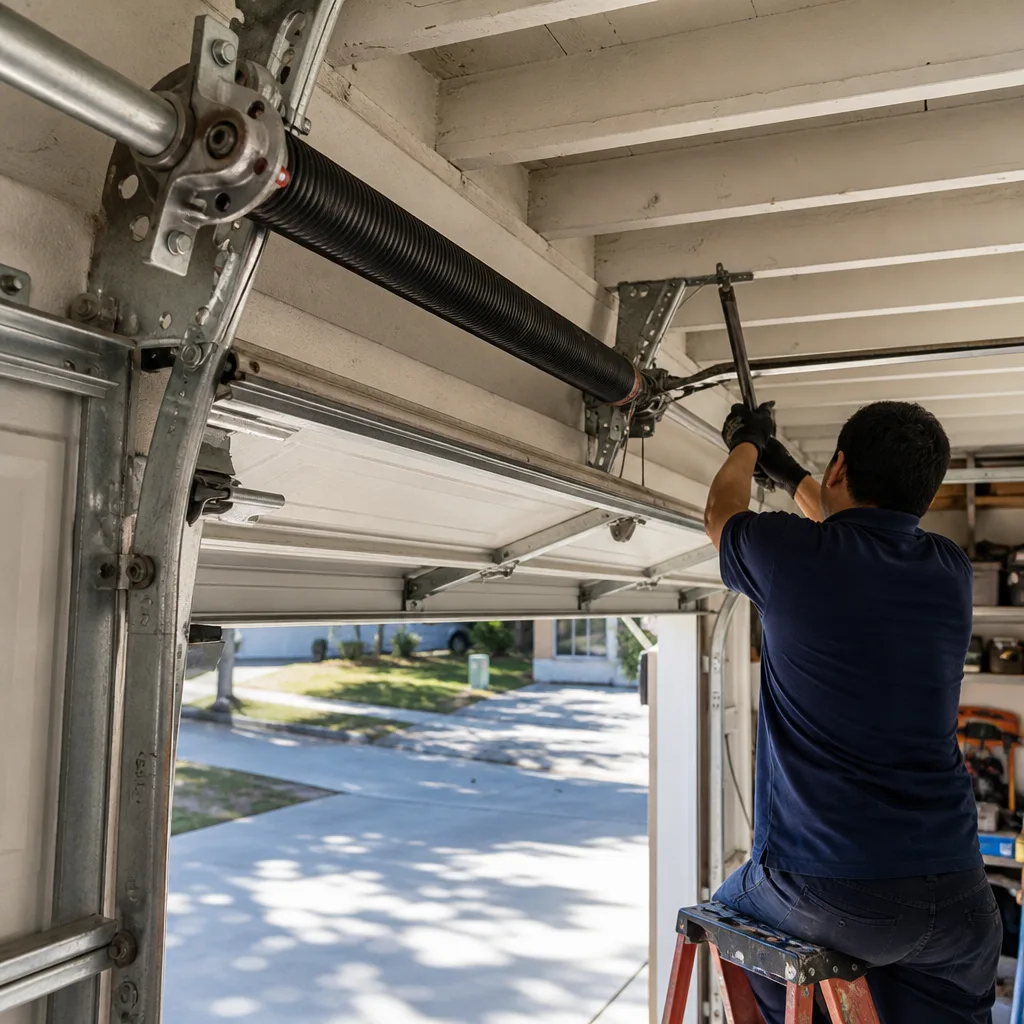 After