
Last updated November 2, 2026
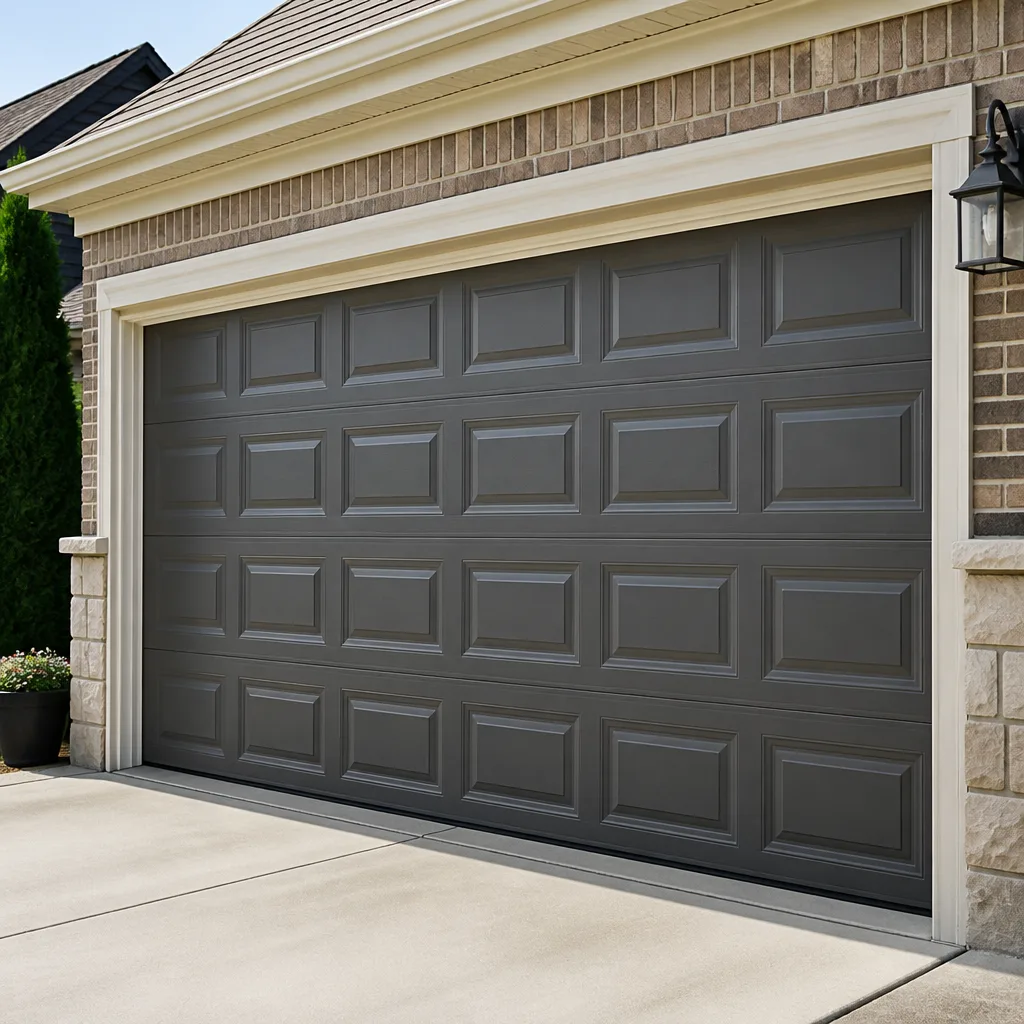 Raised-panel steel
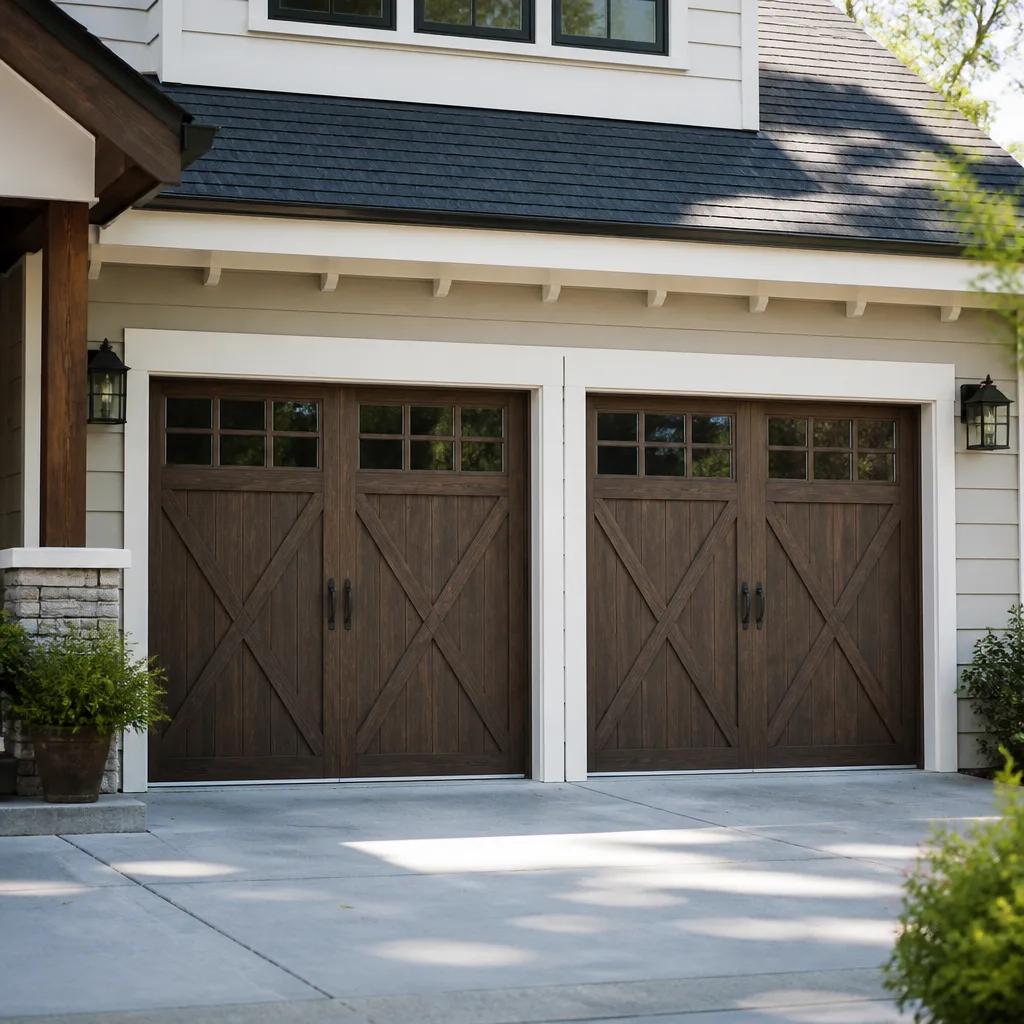 Carriage house
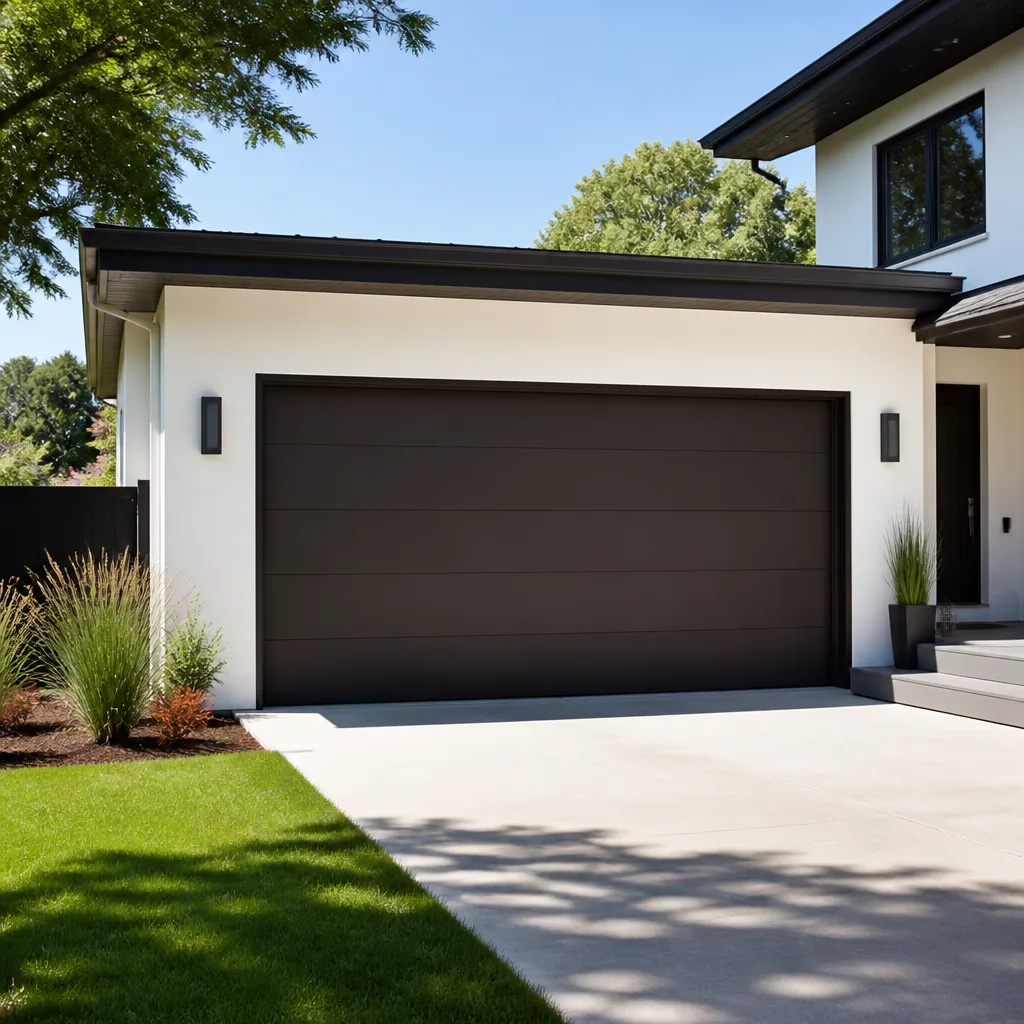 Modern flush
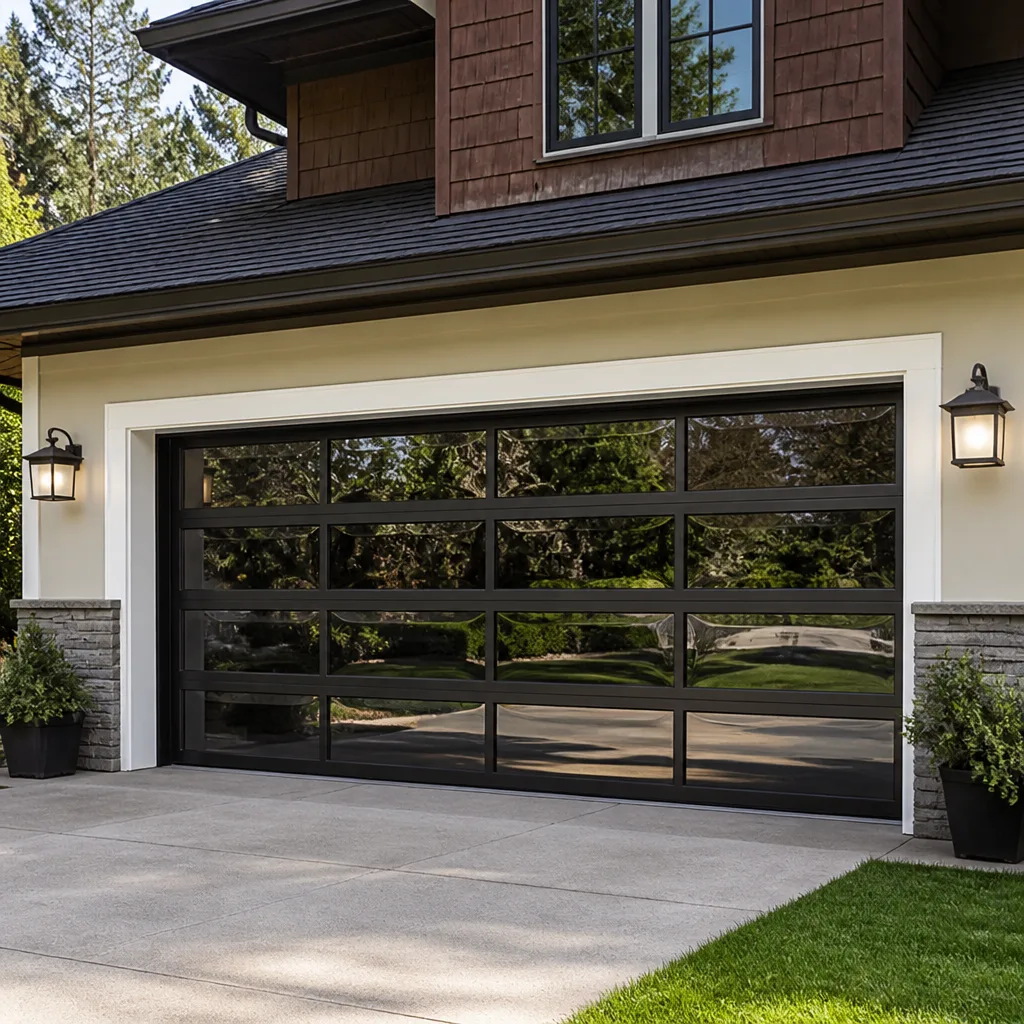 Full-view glass
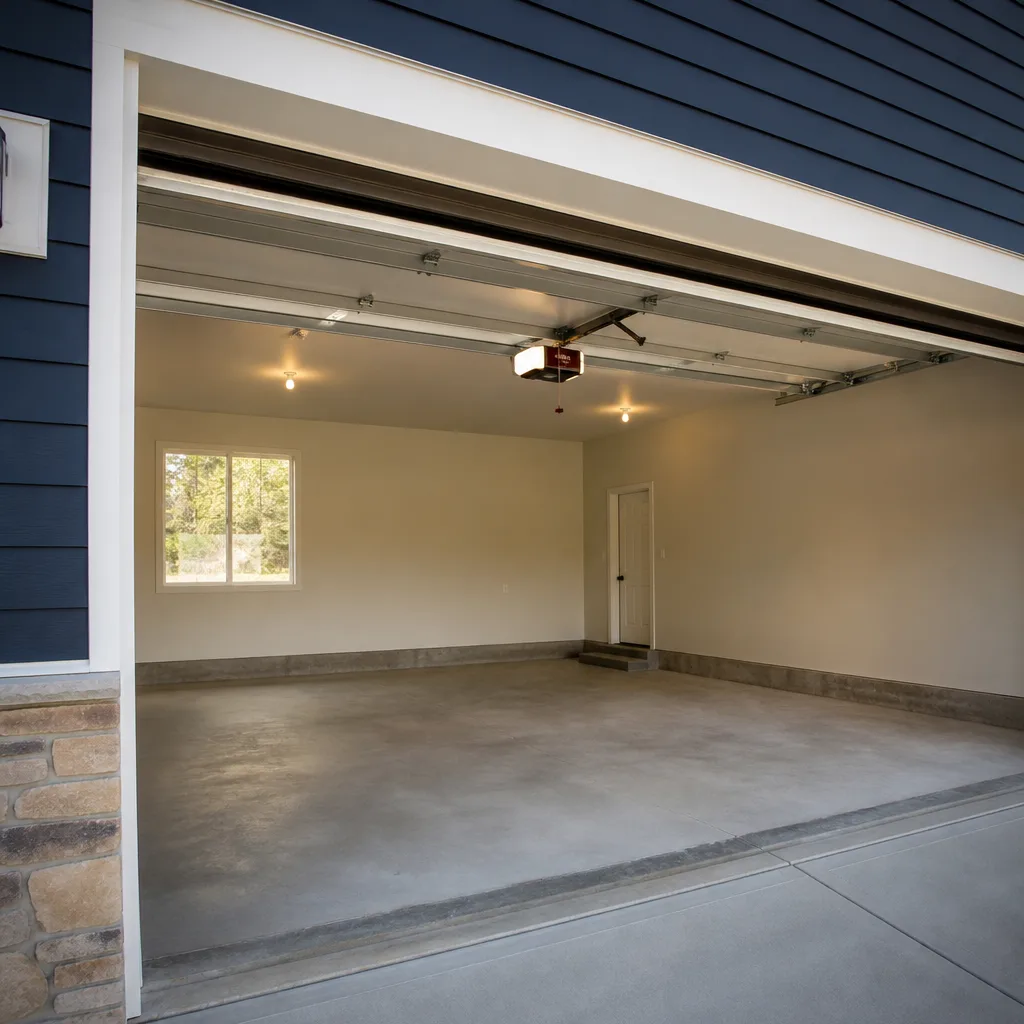 LiftMaster openers
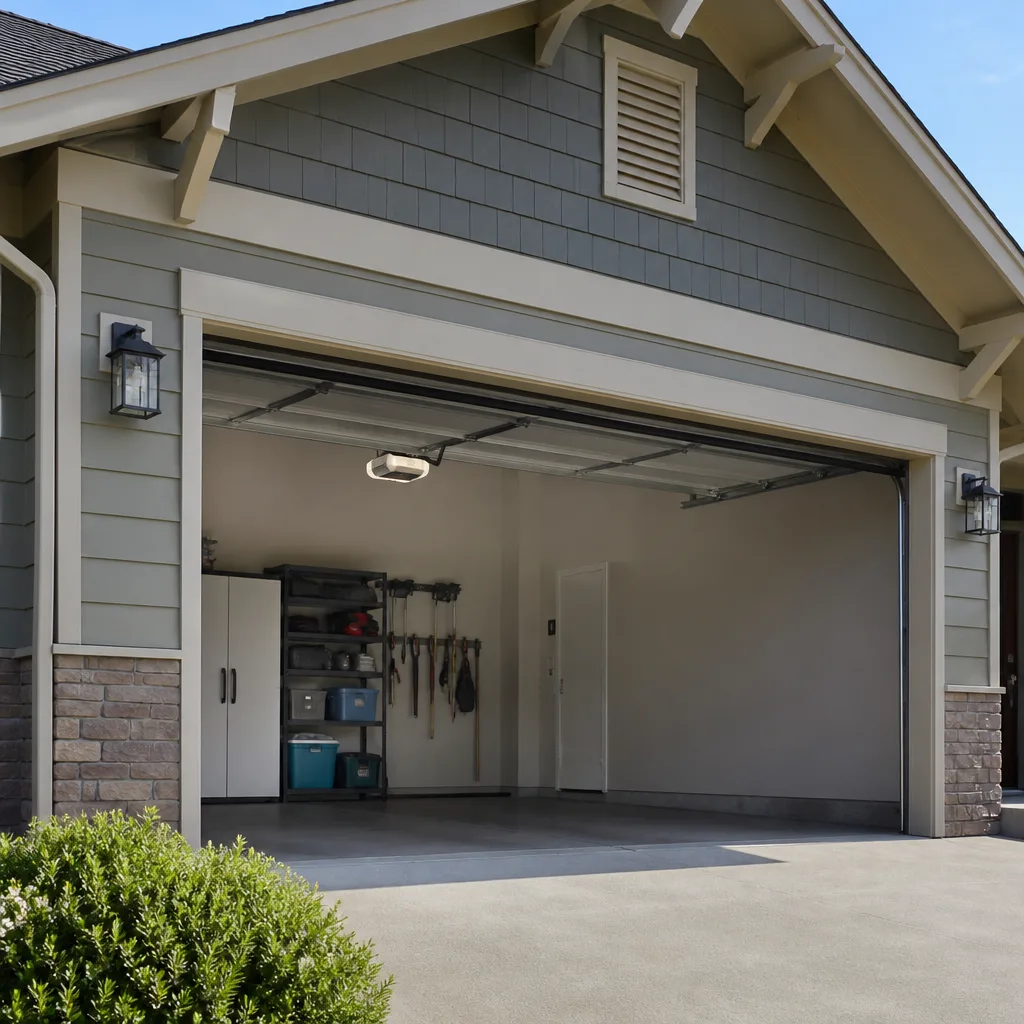 Chamberlain openers
Full 25-point door and opener safety check with every visit - springs, cables, rollers, tracks, and your LiftMaster or Chamberlain opener included
You get a price before we start. It does not change when the truck arrives.
Get your free estimateDIY vs Professional Garage Door: The Gardena Homeowner’s Decision Guide
A garage door torsion spring stores roughly 100 to 200 foot-pounds of torque when fully wound. That’s not a scare tactic. It’s the reason this guide draws a clear line between what any careful homeowner in Gardena can handle on a Saturday morning and what genuinely requires a trained technician. We’re going to walk through the specific tasks that fall on each side of that line, explain the physics without the drama, and help you decide when calling a pro is actually the cheaper move.
Quick Answer
For most Gardena homeowners, DIY garage door work is safe and sensible for lubrication, sensor realignment, remote reprogramming, and visual inspections, but torsion spring replacement and cable work should always go to a licensed professional because the stored energy in a wound spring can cause severe injury. The smartest approach is to handle the no-risk maintenance yourself and call a specialist the moment the job involves lifting cables, torsion tubes, or anything under tension.
Styles & brands we work with
- Raised-panel steel
- Carriage house
- Modern flush
- Full-view glass
- LiftMaster openers
- Chamberlain openers
Table of Contents
- The Physics: Why Torsion Springs Are Different
- What You Can Safely Do Yourself
- The Hard Line: Work That Stays With a Pro
- The Middle Ground: DIY Only With the Right Information
- The YouTube Problem: Generic Videos vs. Your Specific Door
- When a DIY Attempt Costs More Than the Service Call
- Gardena-Specific Factors That Change the Calculation
- How Your Door Brand Changes the DIY Math
The Physics: Why Torsion Springs Are Different
Most household repairs involve parts that sit still when you’re not touching them. A leaky faucet, a sticking window, a squeaky hinge. These things rest at zero energy. A torsion spring, by contrast, is a coiled bar of hardened steel that never fully unwinds. Even when the door is open and the spring appears relaxed, it’s still holding residual tension. When the door is closed, that spring is loaded with enough stored energy to lift 150 to 400 pounds of door panel.
What makes torsion springs uniquely dangerous is the way that energy releases. If a winding bar slips out of the winding cone while the spring is under load, the cone spins backward at high speed. The bar becomes a projectile. The spring itself, if it snaps, releases thousands of pounds of force through jagged steel edges. We’ve been in the garage door service business long enough to see the aftermath of failed DIY spring attempts, and the results are never worth the money saved.
Here’s the part that surprises most people: the danger isn’t just during the repair. An old spring that’s nearing the end of its life can snap while the door is closed with no one touching it. That’s why regular inspection matters. If you see a visible gap in the coils of a torsion spring, that’s a spring that has already failed and is waiting for gravity to finish the job. Call someone who handles this every week, not a generalist handyman who might not have touched a torsion system in months.
For Gardena homeowners, this matters even more because of how often doors cycle. Most of us open and close our garage doors three to five times a day. Over a decade, that’s roughly 15,000 to 18,000 cycles. Springs are rated for cycle life, usually 10,000 for standard springs and 25,000-plus for high-cycle. The point is, your springs were always going to fail eventually. It’s not a question of if. It’s a question of who’s standing nearby when they do.
If you want a deeper look at how doors fail and what repairs look like in practice, our Garage Door Repair in Gardena guide covers the full range of common issues and what they cost to fix.
What You Can Safely Do Yourself
There’s a real list of garage door maintenance tasks that require no special tools and carry no meaningful risk. If you’re comfortable with a socket wrench and can follow a manufacturer’s manual, these are fair game. They also genuinely help your door last longer, especially in Gardena’s dry, dusty climate where grit accumulates in tracks and rollers faster than homeowners expect.
- Lubrication. Use a white lithium grease on the hinges, rollers, and bearings, and a silicone-based spray on the torsion spring. Do this every six months. It takes 15 minutes and costs about $10. Don’t use WD-40 as a lubricant – it’s a solvent and will strip the existing grease.
- Sensor realignment. If your door reverses when closing or won’t close at all, check the photo-eye sensors near the bottom of each track. They should face each other directly, with small indicator lights that glow steadily when aligned. A gentle twist of the mounting bracket usually fixes it.
- Remote and keypad reprogramming. Every opener brand has a learn button on the motor unit. Press it, press the button on your remote, and you’re done. The manual for your specific Chamberlain, LiftMaster, or Genie model has the exact sequence.
- Visual inspection. Look at the cables, rollers, hinges, and spring coils every couple of months. You’re looking for frayed cable strands, cracked or chipped rollers, and gaps in the torsion spring. You don’t need to fix what you find. You just need to know it’s there before it becomes an emergency.
- Weather seal replacement. The rubber strip along the bottom of the door gets brittle in Gardena’s sun and heat. It slides out of the retainer channel and a new one slides back in. No tools required beyond maybe a utility knife to trim the ends.
- Panel dent assessment. Small dents in a steel door panel don’t usually affect operation. You can decide whether they bother you cosmetically. If a panel is cracked through or the door is binding, that’s a different conversation about Garage Door Installation in Gardena.
None of these tasks involve releasing tension or removing load-bearing components. That’s the dividing line, and it’s worth keeping crisp.
The Hard Line: Work That Stays With a Pro
The line between what’s safe and what isn’t isn’t about courage or mechanical aptitude. It’s about whether the component you’re touching is under load. When a component is under load, your skill level doesn’t change the physics. Here’s what stays on the professional side of that line, every time.
- Torsion spring replacement. The spring must be unwound and rewound using winding bars inserted into the cone. The bars need to fit the cone precisely. The process requires you to apply controlled force while standing on a ladder directly underneath the spring. Any slip is a serious injury risk.
- Extension spring replacement. These run along the horizontal tracks, and while they’re less lethal than torsion springs, they still hold enough tension to break bones if a cable or bracket fails mid-installation. They also require safety cables to be threaded through the spring, which is easy to get wrong.
- Cable replacement. Lift cables wrap around drums at the top of the door. The drums are bolted to the torsion tube, which is under tension even when the door is up. Removing a cable requires releasing that tension. If the cable snaps while you’re working, the recoil is unpredictable.
- Track realignment. Vertical and horizontal tracks are bolted to the wall and ceiling. If they’ve shifted enough to cause the door to bind or come off the rollers, the fix usually means loosening track brackets while the door is supported in the open position. That’s a two-person job with a specific sequence that prevents the door from dropping.
- Opener motor replacement. The motor unit itself weighs 25 to 40 pounds and mounts to the ceiling with a steel bracket. It involves electrical wiring, safety sensor recalibration, and limit switch adjustments. Our Garage Door Opener Repair in Gardena page covers the full scope of what this work involves.
If you’re standing in your garage in Gardena right now looking at a snapped spring or a frayed cable and wondering whether to take a crack at it, don’t. The money you’d save doesn’t come close to the cost of an emergency room visit, and a botched repair usually damages the door itself, which means you pay for the original repair plus the new damage.
The Middle Ground: DIY Only With the Right Information
There’s a category of garage door work that is technically doable on your own, but only if you have accurate information about your specific door and opener. The problem is that most homeowners don’t know what they don’t know, and the wrong assumption gets expensive fast.
Take roller replacement. If you have a standard torsion system with the door in the open position, you can sometimes unbolt a bottom bracket and swap out a roller. But if you have a low-headroom kit or a rear torsion setup, the sequence is different and getting it wrong can send the door off its track. The same applies to hinge replacement. A numbered hinge on a standard residential door is a bolt-on part. But if your door has a strut or a reinforcement plate from a previous repair, you need to know whether the hinge you’re buying matches the bolt pattern.
Here’s what “the right information” actually means:
- Know your door manufacturer and model. The label is usually on the edge of the door panel or on the inside of the top section. Clopay, Amarr, Wayne Dalton, and Craftsman doors all have different hinge spacing, roller diameters, and track profiles.
- Know your spring type and size. The spring has a color code or painted stripe, but color codes are not standardized across manufacturers. A red spring from one brand isn’t necessarily the same as a red spring from another. You need the wire diameter, inside diameter, and length measured precisely.
- Know your opener’s travel limits and force settings. If you’re adjusting the close force or travel limit on a Chamberlain or LiftMaster opener, the manual tells you exactly how many turns or button presses are safe. Guessing is how doors end up slamming into cars.
- Have the right tools before you start. Winding bars are not crowbars or screwdrivers. They’re specific diameter steel rods designed to seat fully into the winding cone. Using anything else is how accidents happen.
In our experience, most homeowners who get into trouble in the middle ground do so because they watched a video that assumed their setup matched the one on screen. When it didn’t, they pushed forward anyway. If you’re going to attempt middle-ground work, verify your door’s specs first. If you can’t verify them, the honest answer is that you should call someone who can.
The YouTube Problem: Generic Videos vs. Your Specific Door
YouTube has made every homeowner feel like an apprentice. That’s genuinely useful for maintenance tasks, but it creates a false confidence problem for repair work. The average DIY garage door video shows a standard 7-foot steel door with a standard torsion system and a standard opener. Your door in Gardena might be that. Or it might be a low-headroom setup, an 8-foot door, a wood door with different weight distribution, or a commercial-grade opener with different wiring.
The gap between the video and your reality is where the mistakes live. Here’s an example we see regularly. A homeowner watches a video about replacing a Genie opener motor. They go into the garage and realize their unit is a screw-drive model from 2009, but the video shows a belt-drive unit from 2021. The wiring is similar but not the same. The traveler module is different. The limit switch setup is done through a wall panel instead of the motor unit. Now what? Most people push forward and hope for the best.
That’s not a skill gap. It’s an information gap. The honest fix is to get the manual for your exact model. Every major opener brand publishes PDFs of old manuals online. If you can find it and follow it, you’re in decent shape. If you can’t find it, or if the manual references tools you don’t have, that’s the signal to stop and call for Garage Door Service Gardena home level help.
There’s also a subtler issue with generic YouTube content: it often skips the diagnostic step entirely. A video titled “Fix your garage door opener” usually shows you how to replace a part, not how to confirm that’s the failing part. Real diagnosis is the difference between a $25 fix and a $250 parts shotgun. This is where Garage Door Opener Repair in Gardena work stands apart from tutorial culture. We don’t sell you a motor because the remote is dead. We test first.
When a DIY Attempt Costs More Than the Service Call
The economic case for DIY garage door work usually assumes you’ll get it right the first time and buy the right parts at the right price. When that assumption breaks, the math flips quickly. Here are the scenarios we see most often where a DIY attempt ends up costing more than a service call would have.
Wrong spring size. Torsion springs are specific to door weight, drum size, and cable length. Buy the wrong spring and the door won’t balance. It’ll either fly open or refuse to lift. Then you’ve spent $80 to $120 on a spring you can’t return, and you still need the right one installed. The service call you were avoiding was about $180 to $340 for a spring replacement including parts. You’ve now spent your parts budget and still need the labor.
Overtightened bolts and stripped hardware. This happens constantly with track brackets and hinge bolts. A homeowner with a drill on the highest torque setting strips the threads in the door section or breaks a lag bolt off in the wall. Now the repair includes extracting broken hardware and sometimes replacing a door section. The original fix would have taken a tech 20 minutes.
Misdiagnosed opener problems. We see homeowners replace a circuit board because the opener won’t respond, only to discover the wall button was the issue. Or they replace the motor unit entirely because the safety sensors were misaligned. Openers are the most misdiagnosed component in the entire garage door ecosystem. If you haven’t confirmed the failure point, you’re gambling on parts.
Door off track from a botched roller job. Once a door comes off its tracks, it’s not a one-person fix. The door needs to be supported, the tracks realigned, the rollers reseated, and in many cases the cable tension rebalanced. That’s a full service call plus potential damage to panels that weren’t damaged before.
The pattern here is consistent: the expensive part of garage door repair isn’t usually the repair itself. It’s the cost of undoing a mistake. In Gardena, where most homes have attached garages and doors get daily use, a garage door that’s out of commission for three days while you wait for a part or a pro is bigger than an inconvenience. It’s a car stuck outside in the heat, a bike trapped inside, and a home that looks unoccupied from the street.
If you’re weighing DIY against a pro because of cost, get the pro’s quote first. Most reputable shops, including ours, will give you a free estimate over the phone for common repairs. You’ll know the real number before you decide.
Gardena-Specific Factors That Change the Calculation
Gardena has a specific set of conditions that affect garage door wear and repair timing. Dry air, coastal temperature swings, and homes built primarily in the 1950s through 1970s all shape the kinds of failures we see. Here’s what matters when you’re making a DIY decision in this city specifically.
Grit and dust in the tracks. Gardena sits inland enough to get dry, dusty conditions through most of the year. That fine grit works its way into roller bearings and track surfaces. Rollers that would last 10 years in a coastal city can wear out in 7 or 8 here. The good news is that routine lubrication offsets a lot of this, and that’s a DIY task. The bad news is that once rollers are pitted and noisy, they need replacement, which is middle-ground work at best.
Temperature swings and spring fatigue. The South Bay doesn’t get extreme cold, but it does get wide day-to-night swings, especially in spring and fall. Metals expand and contract with those changes, and that cyclical stress contributes to spring fatigue over time. Springs in Gardena tend to fail at the weld seam or at the set-screw mark, and they often fail without dramatic warning. Regular visual inspection catches the early signs.
Older home geometries. A significant portion of Gardena’s single-family housing stock was built before standard garage dimensions were codified. That means lower headroom, shorter ceilings, and doors that are slightly narrower or shorter than the standard 7×16. If your door is a non-standard size, many off-the-shelf DIY parts won’t fit. You’ll need to order specific sizes, which adds days to a repair and makes getting the exact spec right even more important.
Attached garages and family safety. Most Gardena homes have attached garages, which means the garage door is part of the home’s security envelope. A door that’s off its tracks or a spring that fails while you’re in the garage isn’t just a mechanical problem. It’s a risk to anyone in the space. This is one more reason the hard-line rule matters.
How Your Door Brand Changes the DIY Math
Not all garage doors are built to the same tolerances, and the brand you own changes both the availability of DIY parts and the difficulty of common repairs. If you know your door’s brand, you’re already ahead of most homeowners. Here’s how the math shifts for the brands we see most often in Gardena.
Clopay doors are among the most widely installed in the region. Their standard models use common track profiles and off-the-shelf hinge sizes, which makes middle-ground DIY work more feasible if you have the model number. Clopay’s higher-end insulated models, however, use heavier panels and sometimes require high-cycle springs with specific specs. Getting the spring right matters more on these doors because the weight is greater than budget doors.
Amarr doors are built in straight sections with precise hinge placement. The build quality is consistent, which is good for DIY parts matching. The challenge with Amarr is that some of their newer models use proprietary roller stems that aren’t interchangeable with generic rollers. If you’re replacing rollers on an Amarr, buy the brand-matched part or you’ll be doing it twice.
Wayne Dalton doors are unique in one important way: some models use a TorqueMaster spring system instead of a traditional exposed torsion spring. The TorqueMaster is a spring inside a tube, and it looks completely different from a standard torsion setup. Homeowners who try to replace a TorqueMaster spring using standard torsion spring instructions end up in real trouble. If you have a Wayne Dalton door and you’re not sure which system you have, look for a metal tube running across the top of the door. If you see one, that’s a TorqueMaster, and it’s a professional-only job. These are some of the doors we work on most in Gardena projects because the system is specific enough that generic advice doesn’t apply.
Craftsman doors are usually badge-engineered versions of other manufacturers’ products. Most Craftsman doors sold through Sears in the 1990s and 2000s were made by Amarr or Clopay, but the model numbers don’t map cleanly. That makes parts identification harder for DIYers because a Craftsman part number might not cross-reference to anything current. The workaround is to measure the existing part carefully and match by dimension rather than by part number.
The pattern here is straightforward. The more common your door’s design is, the easier DIY parts sourcing becomes. The more proprietary the system, the more likely you are to need someone who already knows that system. That’s where a brand-agnostic service model matters. We work on all of these doors regularly, which means we’re not learning your system for the first time when we show up.
Common Mistakes to Avoid
- Using the wrong tool as a winding bar. A screwdriver, a punch, or a piece of rebar is not a winding bar. Winding bars are hardened steel rods sized to fit the cone socket exactly. Anything else can slip under load and turn into a projectile.
- Replacing springs one at a time. Torsion springs are installed in pairs on most doors. If one has failed, the other has the same number of cycles on it and is about to fail too. Replacing only one leaves you with an unbalanced door and a second failure in your future.
- Disconnecting the opener from the door while the door is open. If you pull the emergency release cord while the door is in the open position, the door can drop hard if the springs are weak. Always disconnect with the door fully closed unless you’ve confirmed the door is balanced.
- Lubricating with WD-40. WD-40 is a degreaser and water displacer. It’ll strip the protective coating from your rollers and hinges. Use lithium grease for metal-to-metal contact points and silicone spray for the spring and rollers.
- Adjusting the opener’s force settings to “fix” a binding door. If your door is binding or dragging, increasing the force setting on the opener makes the motor push harder. That masks the real problem and accelerates wear on the motor, the gears, and the hinges. Fix the binding first, then reset the force.
- Ignoring a torn bottom weather seal. In Gardena, a torn seal lets dust, leaves, and occasional rain into the garage. But more importantly, it changes how the door seats on the floor, which can cause the door to sit slightly uneven and accelerate hinge wear.
- Buying parts before confirming the failure. The most expensive mistake in garage door DIY isn’t the repair. It’s buying a $150 motor when the $12 sensor was the problem. Diagnose first, then buy.
See the difference
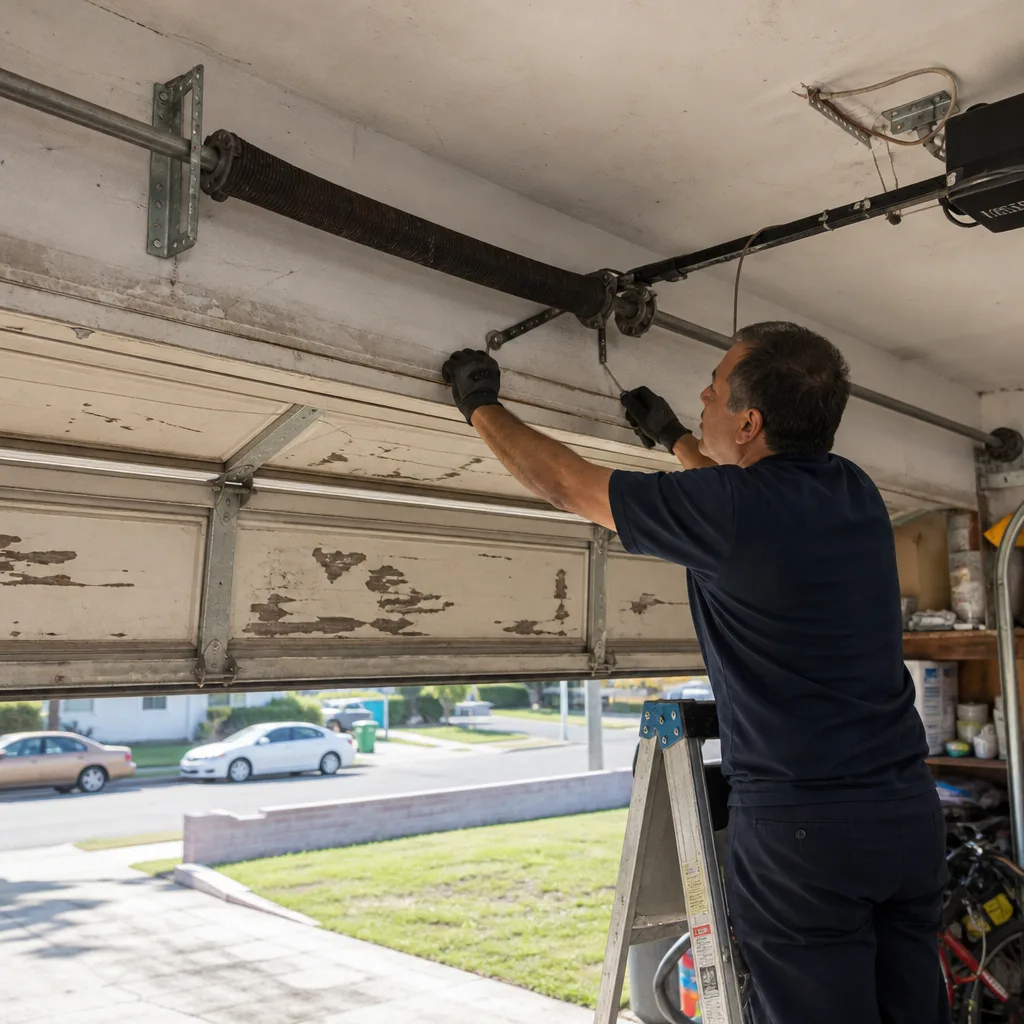 Before
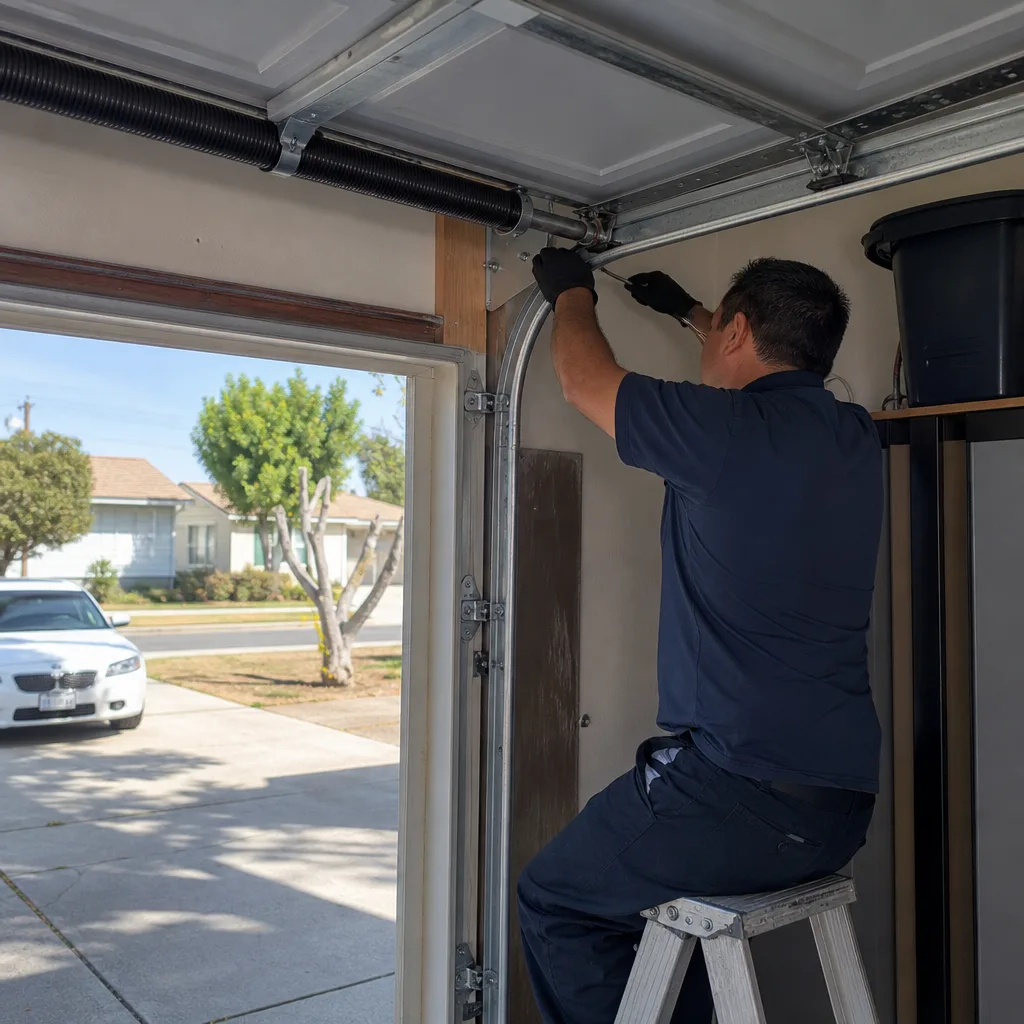 After
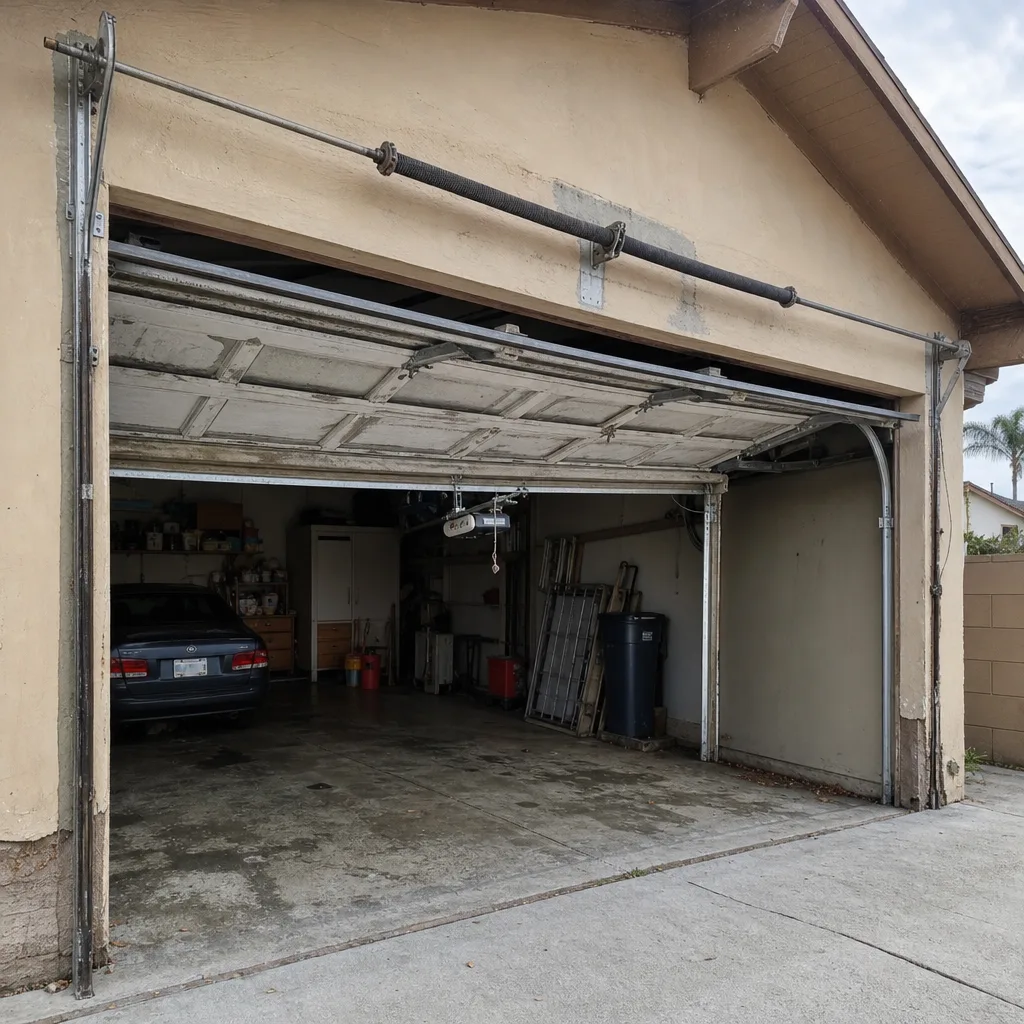 Before
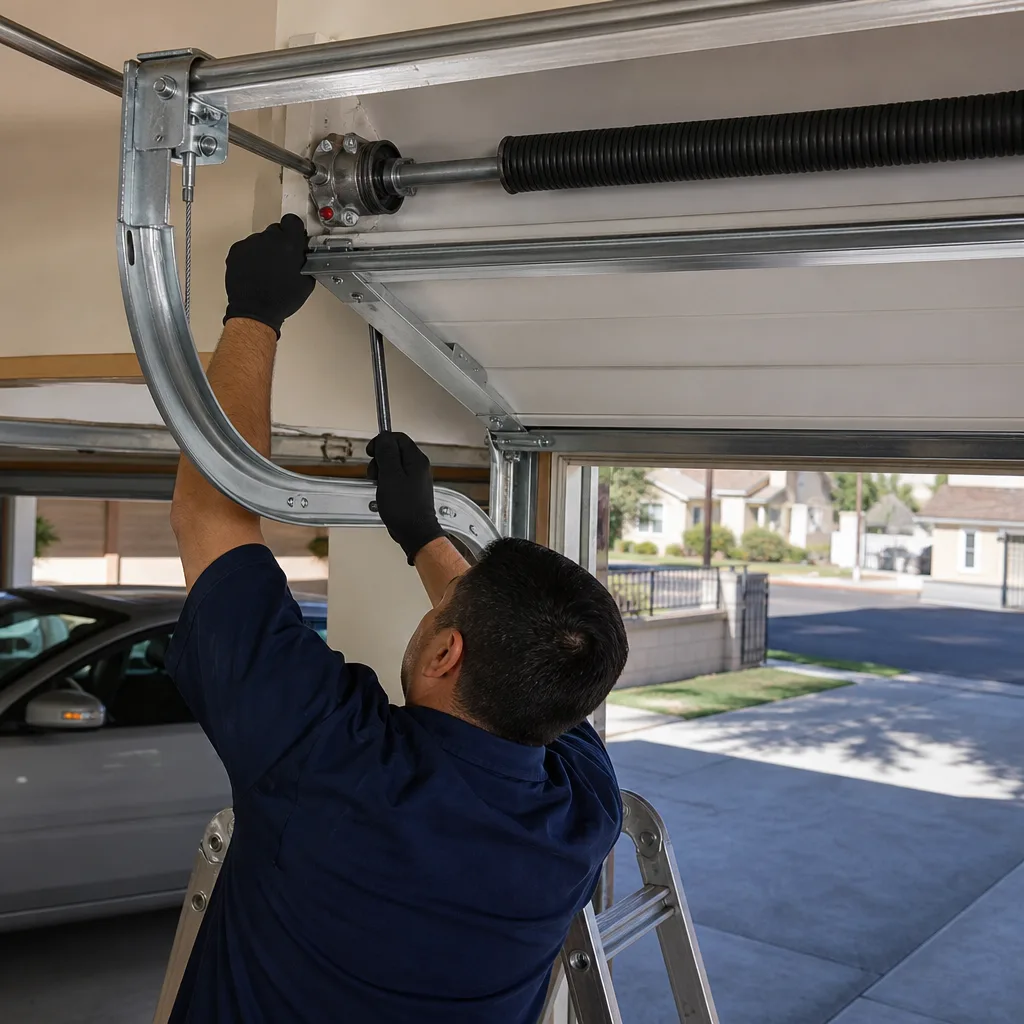 After
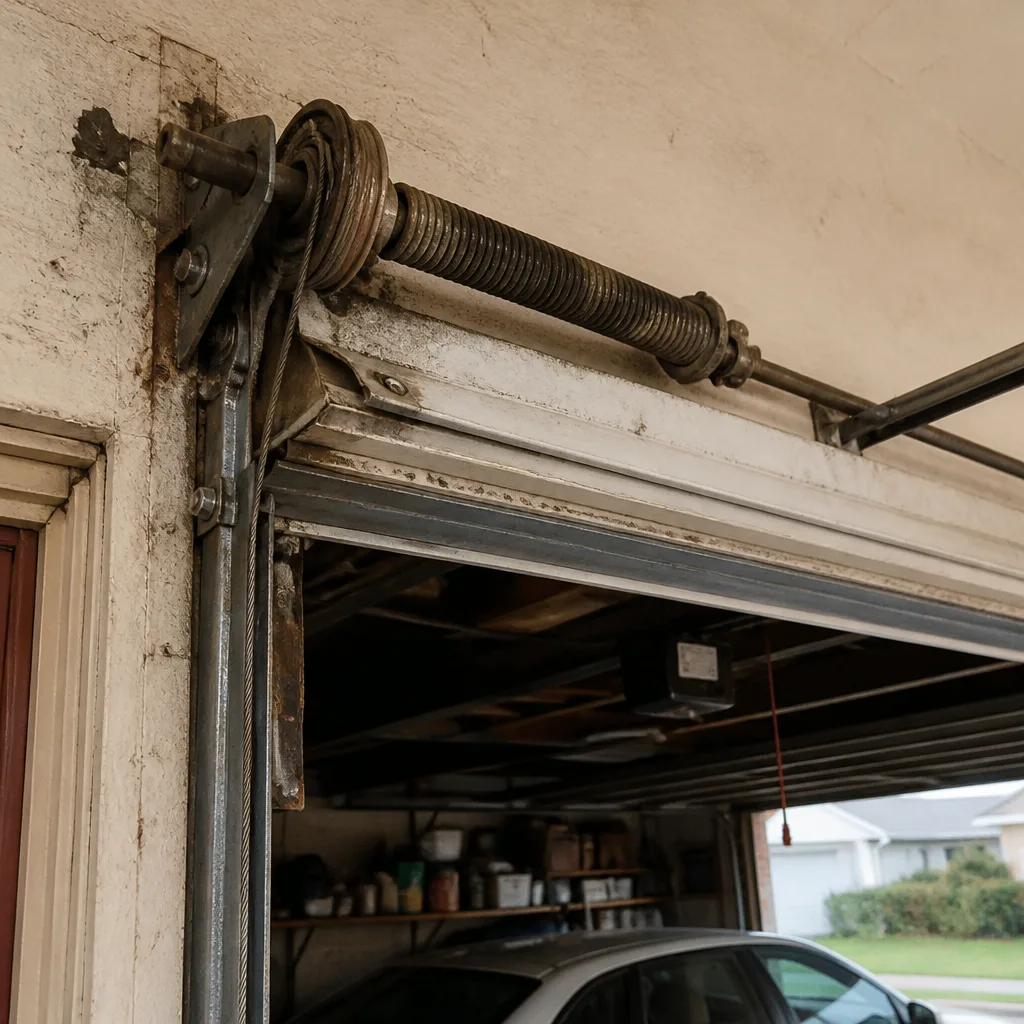 Before
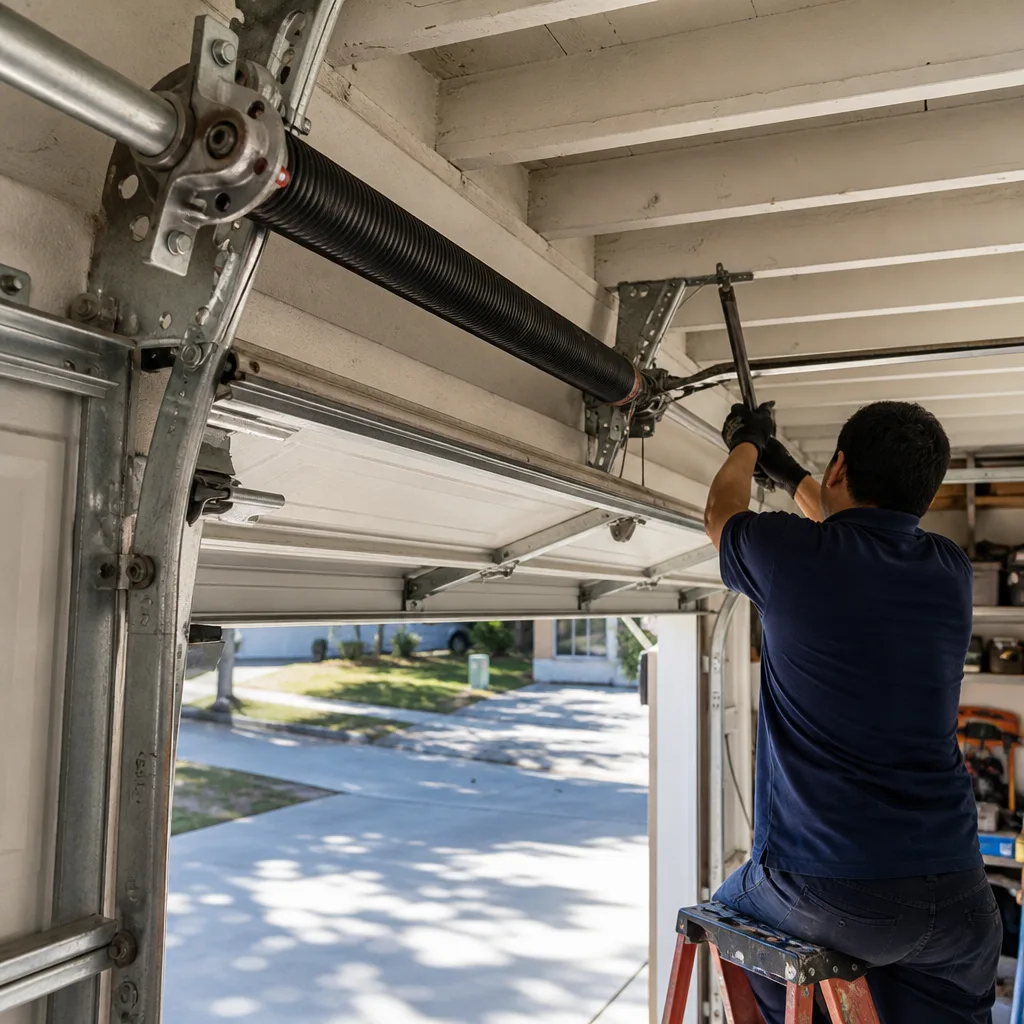 After
When to Call a Professional
Call a professional when the part you’re about to touch is under tension: torsion springs, extension springs, cables, or the bottom brackets they attach to. Call a professional when your door is off its tracks, when you hear a bang and the door won’t move, or when your opener runs but the door stays put. Call a professional when you’ve attempted a middle-ground repair and the door behaves worse than before. And call a professional when you simply don’t want to spend your weekend on a ladder under a loaded spring. We understand that decision completely. Garage Door Service Gardena offers free estimates in Gardena, and we answer the phone when you call (866) 562-1805. If the problem turns out to be something you can handle yourself, we’ll tell you that too.
Frequently Asked Questions
No, torsion spring replacement is not a safe DIY job. The spring holds 100 to 200 foot-pounds of torque, and improper handling can cause severe injury or death. Call a professional for any spring work.
You can safely lubricate hinges and rollers, realign safety sensors, reprogram remotes, replace the bottom weather seal, and visually inspect cables and springs. These tasks carry no meaningful risk and genuinely extend the life of your door.
Spring replacement in Gardena typically runs between $180 and $340 including parts and labor, depending on spring size and whether it’s a single or double spring system. Call (866) 562-1805 for an exact quote for your specific door.
Look for a gap in the spring coils, rust accumulation on the spring itself, or a door that feels heavy when you lift it manually. If the spring has visible gaps or the door won’t stay open without assistance, the spring has already failed.
The most common causes are misaligned safety sensors, an obstruction in the door’s path, or a broken spring that prevents the opener from lifting the full door weight. Check the sensors first by looking at whether their indicator lights are solid and aligned correctly.
Usually no. Most openers have a service life of 10 to 15 years. If yours is 20 years old and showing signs of failure, the money you’d spend on repair often makes more sense applied to a new unit. Call (866) 562-1805 and we’ll help you evaluate the math honestly.
The Bottom Line
The DIY versus professional debate for garage doors comes down to one question: is the part you’re about to touch under tension? If it isn’t, you can probably handle it with basic tools and the right instructions. If it is, the physics don’t care how careful you’re being. Gardena homeowners who master the simple maintenance tasks, learn their door’s specific brand and specs, and know when to call for help are the ones who get the most years out of their garage doors at the lowest total cost. That’s the whole decision guide in a sentence: know your limits, respect the spring, and keep the phone number for a good technician somewhere you can find it before you need it.
Written by the team at Garage Door Service Gardena, serving Gardena since 2011.